

The Overfitting Nightmare
Before the AI boom, researchers faced a frustrating problem: overfitting. Imagine an AI model as a student studying for a test. An overfitted model is like a student who memorizes the answers to the practice questions perfectly but hasn't actually learned
the subject. When the real test comes—with questions it hasn't seen before—it fails spectacularly. In AI, this meant models would become brilliant at classifying their training data but would be useless in the real world. They learned the noise and quirks of their specific dataset, not the underlying patterns. This created a ceiling; making neural networks bigger and more complex often just made them better at memorizing, not better at generalizing.
A Stroke of Unreliable Genius
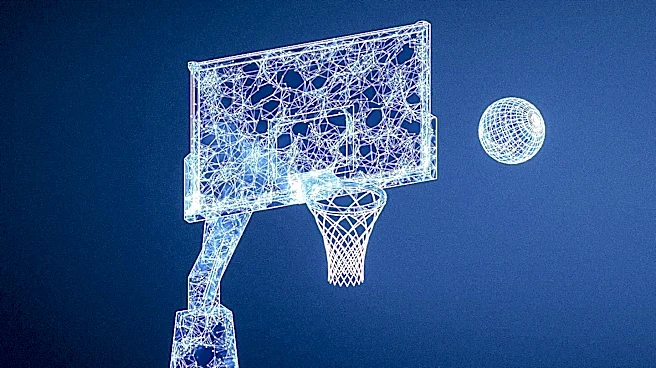
Introduced by Geoffrey Hinton and his team around 2012, dropout was a brilliantly counterintuitive solution. The idea is simple: during training, you randomly and temporarily turn off, or "drop," a certain percentage of the artificial neurons in the network. Think of it like training a basketball team where, for every practice drill, a random player has to sit out. No one can afford to rely too heavily on the star player, because they might not be there for the next play. This forces every player to become more well-rounded and capable on their own. Similarly, dropout prevents neurons from becoming too co-dependent on each other. Each neuron is forced to learn more robust and independent features, making the network as a whole much stronger and less fragile.
Unleashing the Power of Scale
By effectively taming the overfitting problem, dropout unlocked the next era of AI development. Researchers were now free to build much larger and deeper neural networks without them simply memorizing the training data. This was a game-changer. Scale is a critical ingredient for modern AI. Larger models can learn more complex and subtle patterns from vast amounts of data. Techniques like dropout provided the necessary guardrails to make this scaling possible. It's no coincidence that the introduction of dropout coincided with major breakthroughs, like the massive performance leap seen in the AlexNet model for image recognition, which helped kickstart the deep learning revolution.
From Niche Technique to Industry Standard
Today, dropout is a standard tool in the deep learning toolkit, used in everything from the large language models that power chatbots to the computer vision systems in autonomous vehicles. It’s a computationally cheap but remarkably effective way to improve a model's performance on new, unseen data. While newer, more complex regularization methods have been developed, the core idea of dropout remains incredibly influential. It proved that sometimes, making a system slightly less reliable during training can make it far more robust and intelligent in the long run. Each time an AI model provides a useful answer or correctly identifies an object in a photo, it's standing on the shoulders of these quiet, foundational innovations.