







The artificial intelligence revolution is running on overdrive, with each new generation of chips promising breathtaking speed. But there's a paradox at the heart of this progress: the very components enabling this leap are creating a massive energy problem.
The Unrelenting Arms Race for Faster AI
To understand the power paradox, you first have to appreciate the sheer computational muscle modern AI requires. Training and running large language models (LLMs) and other advanced systems is like trying to solve a billion puzzles at once. This has kicked off a silicon arms race, with companies like Nvidia, AMD, and Google locked in a battle to produce the fastest, most powerful accelerator chips. Each new architecture, from Nvidia's Hopper to its successor, Blackwell, delivers staggering performance gains. These chips are the engines of the AI economy, allowing models to process vast datasets and generate human-like text or images in seconds. The demand is insatiable because, in the world of AI, speed is directly tied to capability and competitive advantage.
Why Faster Chips Are Power Hogs
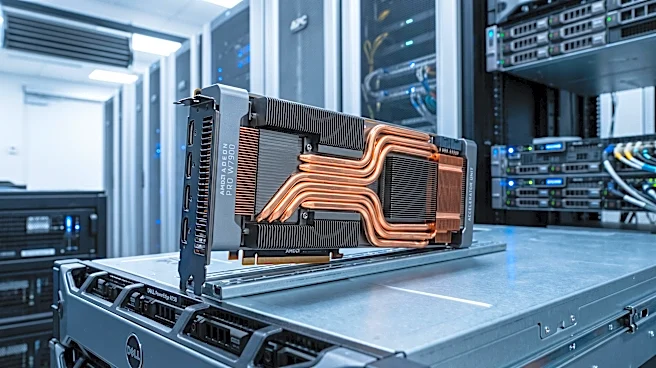
Here's where the paradox kicks in. While new architectures can be more efficient on a per-calculation basis, the push for raw performance often leads to a higher overall power draw. Think of it like a muscle car: it's faster than a family sedan, but it burns a lot more fuel to achieve that speed. The latest AI GPUs pack billions more transistors and can consume 1,000 watts or more per chip—a significant jump from the 700-watt standard of the previous generation. This individual power hunger is then multiplied across tens of thousands of GPUs packed into a single data center. Before 2024, a large data center might have needed 20 megawatts of power; today, AI-ready facilities are being designed for 100 to 300 megawatts, with some campuses targeting a gigawatt—enough to power a small city.
When the Data Center Can't Get Juice
This explosive growth in energy demand is slamming into a wall: the physical limitations of our electrical grid. Access to power, not technology or capital, has become the number one constraint for building new data centers. Utility companies are struggling to keep up, and the timelines for getting new high-voltage infrastructure approved and built can stretch for years—far longer than the 18 to 24 months it takes to construct a data center. This mismatch is causing project delays and creating 'power deserts' in key regions. In areas with high concentrations of data centers, like Virginia, these facilities are projected to consume a massive share of the state's total electricity. The problem is so acute that tech giants are now making direct deals with energy producers and exploring on-site power generation to bypass the grid bottleneck entirely.
The Race for a Cooler, Smarter Future
The industry is now scrambling for solutions. The most immediate is a shift away from traditional air cooling, which is hitting its physical limits. Liquid cooling, where coolant is circulated directly to the chips or entire servers are submerged in a nonconductive fluid, is becoming a necessity, not a luxury. It's far more efficient at removing the intense heat generated by AI racks. Concurrently, there's a huge push in software optimization. Researchers are finding ways to make AI models more efficient, potentially cutting their energy use significantly without sacrificing performance. These efforts, combined with better real_time energy monitoring and management within data centers, represent a new frontier in the AI race—one focused not just on computational speed, but on sustainable power.