






The Original Promise: Infinite Flexibility
Imagine a computer chip with no predetermined function. That was the classic FPGA. It was a sea of generic logic blocks and wires that a hardware engineer could configure to create any digital circuit imaginable. This made them the go-to choice for prototyping
new chips, for tasks requiring specialized digital signal processing, and for applications in aerospace or defense where hardware might need to be updated in the field. The beauty was their reconfigurability; you could change the chip’s function as easily as loading a new software file. This provided unmatched flexibility, but that very blankness would soon become a limitation in a rapidly changing technological landscape.
When the World Changed, So Did the Demands
Around the 2010s, two forces collided to change computing forever: the explosion of artificial intelligence and the immense scaling of data centers. Suddenly, the most important workloads involved running massive neural networks and processing unprecedented volumes of data. For these tasks, traditional FPGAs faced a tough challenge. While their parallel nature was a good fit, implementing complex AI models purely in programmable logic was often inefficient. Compared to specialized chips like GPUs (Graphics Processing Units) and ASICs (Application-Specific Integrated Circuits), FPGAs could be slower, more power-hungry, and, most importantly, far more difficult to program. The world now demanded not just flexibility, but raw performance, energy efficiency, and faster development cycles—a combination the classic FPGA struggled to deliver on its own.
The Solution: The 'Swiss Army Knife' Chip
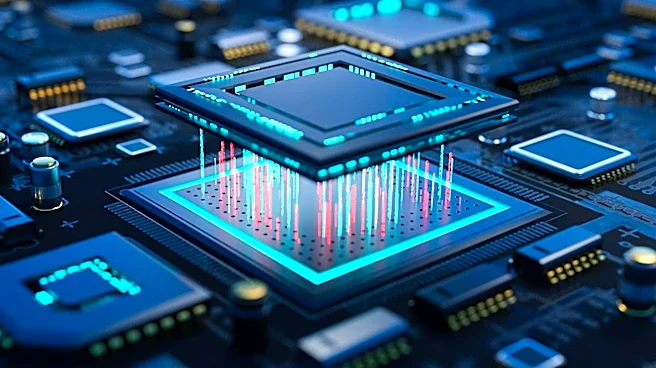
The answer wasn't to abandon the FPGA's flexibility, but to augment it. Chipmakers like AMD (which acquired Xilinx) and Intel (which acquired Altera) pivoted to a new design philosophy: the heterogeneous system-on-chip (SoC). Instead of a blank slate, the modern FPGA is an integrated platform, now often called an Adaptive Compute Acceleration Platform (ACAP). These new devices combine the traditional programmable logic fabric with hardened, pre-built functional blocks. This includes multi-core ARM CPUs for running operating systems and complex software, specialized AI engines for accelerating machine learning tasks, and high-speed networking and memory controllers. The programmable logic is still there, but now it’s surrounded by a powerful, pre-built infrastructure, transforming the FPGA from a simple component into a complete, adaptable computing system on a single piece of silicon.
The Real Reason: Lowering the Barrier to Entry
And here we arrive at the real reason for this dramatic shift. While the performance gains from hardened blocks are significant, the most profound driver is business strategy. The goal is to make this powerful technology accessible to a much broader audience. Historically, programming an FPGA required a specialized hardware description language and a deep understanding of digital design. But by integrating a CPU, these new adaptive SoCs can be programmed with familiar software languages like C++ or Python. This opens the door for legions of software developers, not just a niche group of hardware engineers, to harness the power of FPGAs. By simplifying the development process and providing pre-built accelerators for common tasks like AI, companies can drastically reduce their time-to-market. It’s a strategic move to compete directly with GPUs and ASICs for the lucrative AI and data center markets by offering a platform that blends the performance of specialized hardware with the adaptability that software-driven industries demand. The future of the FPGA was designed this way not just to be more powerful, but to be more usable and, therefore, more profitable.