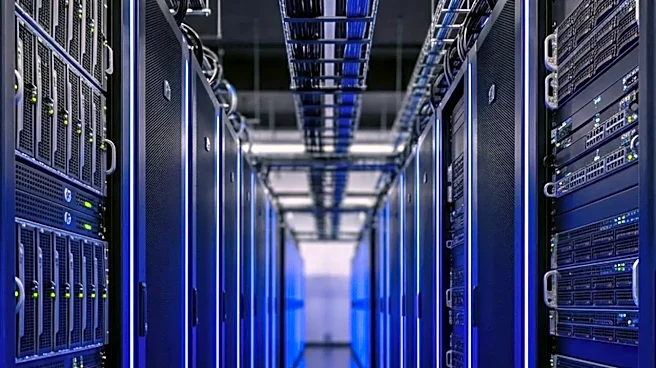





The magic of AI feels ethereal, but it runs on a brutally physical and expensive foundation. The true cost of the AI revolution isn't in code, but in the sprawling data centers that consume power, demand cooling, and burn through hardware.
The Unquenchable Thirst for Power
The single largest
operating expense for any AI data center is electricity. AI workloads are not like traditional computing; they run at near-maximum capacity around the clock, creating a massive, flat, and unyielding demand for power. This has completely upended energy markets, with global data center electricity use projected to hit 565 terawatt-hours in 2026, a 26% year-over-year increase. In the U.S. alone, data centers consumed about 4.4% of all electricity in 2023, a figure that could climb as high as 12% by 2028. The metric that governs this is Power Usage Effectiveness (PUE), which measures how much extra energy is used for things like cooling and infrastructure for every watt that goes to the IT equipment. While hyperscalers like Google achieve impressive PUEs near 1.1, the industry average is closer to 1.5, meaning half a watt is spent on overheads for every watt that powers a server. This relentless power draw is so significant that access to electricity has become a primary constraint on AI expansion, with dozens of data center projects delayed simply because the grid cannot support them.
Keeping Cool Under Pressure
All that electricity consumption generates an equivalent amount of heat, and managing it is a monumental and costly challenge. The graphics processing units (GPUs) that power AI are incredibly dense, with a single rack of AI servers easily drawing over 40 kilowatts—far beyond what traditional air-cooling systems were designed to handle. While air cooling still works for moderate-density racks, the high-performance computing required for AI is pushing the industry toward liquid cooling. These systems, which include methods like direct-to-chip cooling, circulate specialized fluids to draw heat directly from the processors. Liquid cooling is far more efficient at dissipating heat, but it comes at a steep price, costing between $1,000 and $2,000 per kilowatt cooled. For a large-scale facility, this can translate into millions of dollars in upfront and operational costs. Furthermore, some cooling methods, like evaporative cooling, are incredibly water-intensive, creating significant sustainability concerns in many regions.
The Staggering Price of Hardware
While power is the biggest operating cost, the initial capital expenditure for an AI data center is dominated by one thing: the servers themselves, which can account for 60% of the total cost of ownership. A single highnd AI GPU, like an NVIDIA H200 or B200, can be rented for several dollars per hour. Building a facility with tens of thousands of these chips represents a capital investment in the hundreds of millions or even billions of dollars. The bigger issue is the brutal pace of hardware obsolescence. A new generation of GPUs, like the move from NVIDIA's Hopper to Blackwell architecture, can offer significant performance jumps, making priorgeneration hardware less competitive for cuttingedge AI model training and inference. This rapid refresh cycle means that multi million dollar hardware assets depreciate incredibly quickly, forcing operators into a constant and expensive upgrade cycle to stay relevant. It's a high stakes game where today's state of the art can become tomorrow's liability.
The Utilization Imperative
You can have the most powerful, efficiently cooled data center in the world, but if its expensive hardware sits idle, it's just a money pit. This is where utilization—the percentage of available computing capacity that is actually being used and generating revenue—becomes the most critical economic lever. Every minute a GPU isn't processing a workload, it's a wasted expense. The goal is to maximize the 'cost per token', the allin cost to produce a unit of AI output. Achieving high utilization is difficult; it requires sophisticated scheduling software, a steady pipeline of customer demand, and operational excellence to minimize downtime. Even with the best management, a 100% utilization rate is impossible due to maintenance, fluctuating demand, and system inefficiencies. A facility might own 10,000 GPUs but only achieve a billable utilization of 70%, meaning only 7,000 are earning money on average. Ultimately, profitability in the AI data center business hinges on this single factor: how effectively a company can turn its massive fixed costs into productive, revenue generating computation.