




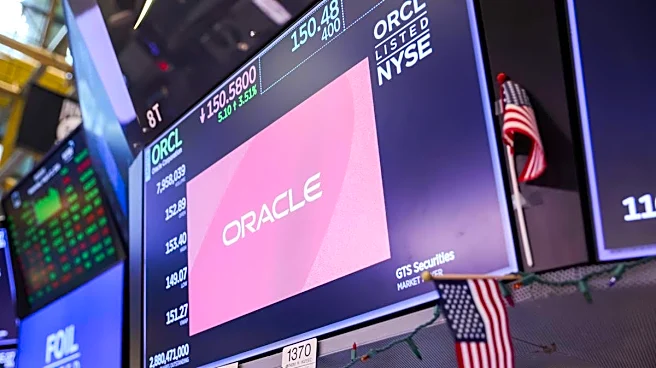

In Silicon Valley, where titans rise and fall with shocking speed, Oracle is an anomaly. It's the grizzled veteran that has seen it all, a survivor that predates the internet as we know it. So how did this tech giant do it?
The Foundation: King of the Database
Oracle’s story begins in 1977,
long before the first web browser. Founded by Larry Ellison, Bob Miner, and Ed Oates, the company—then called Software Development Laboratories—was built on a revolutionary idea from an IBM research paper: the relational database. While others overlooked it, Ellison’s team saw the future. They commercialized the concept, creating the Oracle Database, which allowed businesses to store and retrieve data with unprecedented efficiency using Structured Query Language (SQL). This move defined the first boom Oracle rode: the corporate shift to client-server computing. By the late 1980s, Oracle was the world's largest database management company, having cemented itself as the essential, if unglamorous, plumbing for global enterprise.
The First Test: The Dot-Com Bubble and Bust
When the dot-com bubble inflated in the late 1990s, Oracle’s stock soared along with the rest of the tech world. But unlike the countless startups building castles on sand, Oracle's business was anchored to real, paying enterprise customers. When the bubble burst in 2000-2001, causing a recession, Oracle was hit hard—its stock price cratered over 80%—but it didn't break. The company had made missteps, including an accounting scandal in the early 90s that nearly led to bankruptcy, but it had learned from them. Post-bust, instead of retreating, Oracle went on the offensive. It pivoted to a new strategy that would define its next decade: growth through aggressive acquisition.
The Great Recession and the Shopping Spree
As the world stared into the abyss of the 2008 financial crisis, Oracle, armed with a massive cash reserve, saw opportunity. While competitors struggled, Oracle went shopping for bargains, embarking on one of the most significant acquisition sprees in tech history. It kicked off with a hostile takeover of rival PeopleSoft for $10.3 billion in 2005, followed by Siebel Systems in 2006. This strategy allowed Oracle to consolidate the market and bolt on entire product suites for customer relationship management (CRM) and human resources. The masterstroke came in 2010 with the $7.4 billion acquisition of Sun Microsystems. This move was about more than just buying another software company; it gave Oracle control of the Java programming language and a hardware division, allowing it to sell fully integrated tech 'stacks' from the chip to the application.
The Third Boom: A Grudging Pivot to the Cloud
Oracle was famously late to the cloud computing party. Larry Ellison initially mocked the concept. But as Amazon Web Services and Microsoft Azure began to dominate the next great tech boom, Oracle realized it had to adapt or face irrelevance. The pivot was slow and expensive, requiring a complete shift in its business model from one-time license sales to recurring subscriptions. The company has spent tens of billions building data centers to compete, taking on significant debt to fund the transition. While initially struggling to gain momentum, Oracle found its niche by focusing on highperformance computing for enterprise clients and, more recently, the massive infrastructure needs of the AI boom. Deals with companies like OpenAI have positioned Oracle as a serious, if specialized, player in the cloud wars, proving its ability to evolve once more.