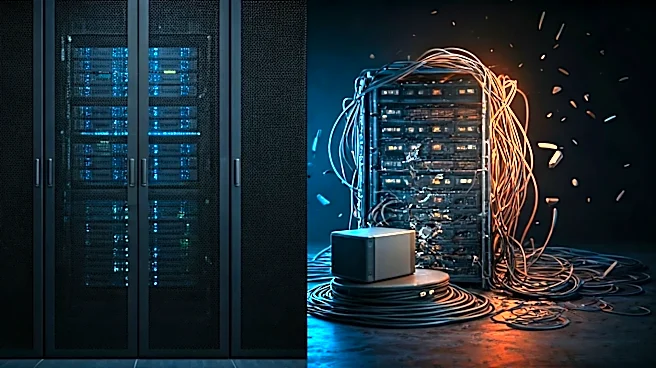










1. They Look for Constraints, Not Just Accuracy
A founder's eyes might light up at a paper claiming 99% accuracy on a benchmark task. A staff engineer immediately scrolls past the abstract to find the 'Methodology' and 'Limitations' sections. They aren't just looking at the final score; they're reverse-engineering
the cost to achieve it. Was the model trained on 1,024 high-end GPUs for six months? Does it require a perfectly clean, pre-processed dataset that doesn't exist in the real world? [3] Founders often see the 'what' (the flashy result), while senior engineers are trained to see the 'how' (the expensive, impractical, and often brittle process required to get there). [2] They know that a 2% accuracy gain is worthless if it increases inference costs by 500% or introduces massive latency.
2. They Value the Negative Results
Academic papers are designed to highlight success. But for a practitioner building a real-world product, the failures are often more instructive. Experienced engineers treasure the ablation studies—experiments where authors systematically remove parts of their model to see what hurts performance. This tells them where the real innovation lies. Is it one specific new technique, or a complex combination of ten small tweaks that are impossible to replicate? Likewise, they look for what *didn't* work. Many papers that never get published contain more practical wisdom for a business than the ones that do. An engineer understands that knowing what to avoid saves more time and money than chasing a novel architecture that only works under specific lab conditions. [5]
3. They Translate 'Model' into 'System'
A research paper presents a model in isolation. A founder might think, "Let's plug this in!" A staff engineer sees the model as one small component in a sprawling, fragile system. [1] This is the core of MLOps (Machine Learning Operations): a model is not a product. [1, 4] To make that shiny new algorithm work, you need data collection pipelines, feature extraction, robust monitoring, automated retraining, and infrastructure to handle real-world, messy data. [3] A staff engineer reading an ICML paper is mentally building this entire system, estimating its complexity, and identifying potential points of failure. They understand that up to 90% of ML projects fail not because the model is bad, but because the supporting system was never properly built. [1]
4. They Know Most Problems Don't Need a Custom Model
One of the most common—and expensive—mistakes a founder can make is hiring an ML team to build something from scratch when a powerful API would suffice. [6] A senior engineer's first question isn't, "Can we build this?" but rather, "Should we?" They know that for many business problems, the performance of a general-purpose model from a major provider like OpenAI or Anthropic is more than enough, especially at the early stages. [6] Chasing a custom solution based on a niche research paper can mean burning hundreds of thousands of dollars and months of engineering time for a marginal gain. An experienced practitioner provides the critical wisdom to focus resources on the user experience and business problem, not on reinventing a wheel that's already turning smoothly. [8]
5. They See People and Process Gaps
Finally, a staff ML engineer reads a research paper and sees the team required to implement and maintain it. Does this new approach require expertise in reinforcement learning or geometric deep learning that your current team lacks? [7] Will it require a new, more rigorous data annotation process? Deploying an ML model is a cultural and organizational shift, not just a technical task. [1, 2] It requires breaking down silos between data science, engineering, and product teams. [1] While a founder might be focused on the potential market advantage, the staff engineer is assessing whether the company has the talent, budget, and operational maturity to actually pull it off without grinding the entire organization to a halt. [3, 7]