





The Two Philosophies: Custom vs. Configurable
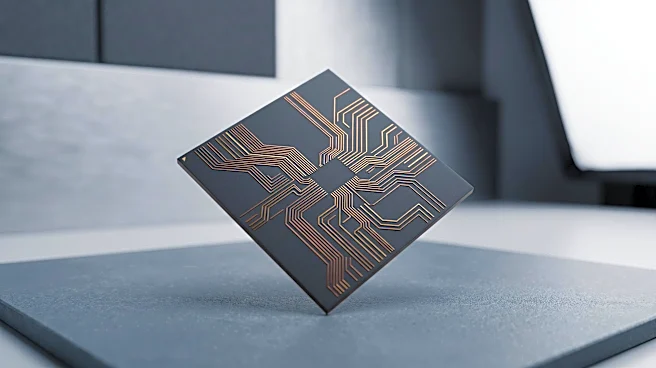
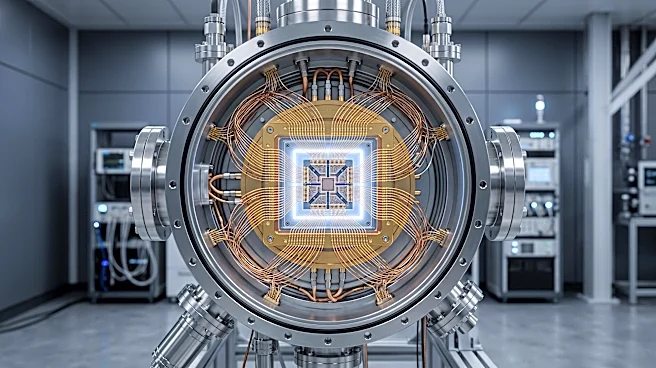
At its core, the disagreement over ASICs boils down to a fundamental trade-off between performance and flexibility. An ASIC is a chip designed for one specific purpose, like a key cut for a single lock. Think of it as a custom-built race car, engineered
from the ground up to do one thing—win a specific race—with maximum speed and fuel efficiency. The alternative is often a Field-Programmable Gate Array (FPGA), which is more like a high-performance street-legal car. It's powerful and fast, but it’s also reconfigurable; you can tune the engine, swap the tires, and adjust the suspension for different tracks. An FPGA can be programmed and reprogrammed in the field, offering flexibility that an ASIC, once manufactured, can never provide. This fundamental difference splits engineering opinion down the middle.
The Pro-ASIC Camp: Performance at Any Cost
Engineers who champion ASICs are typically driven by the relentless pursuit of optimization. For them, the allure is unmatched performance and power efficiency. Because an ASIC is purpose-built, it contains only the necessary logic for its task, making it incredibly fast and energy-efficient compared to a more generalized chip like an FPGA. In applications where every milliwatt of power or nanosecond of latency matters—such as in smartphones, high-frequency trading hardware, or large-scale AI data centers—an ASIC is often the only way to win. Furthermore, for products manufactured in high volumes, the per-unit cost of an ASIC can be significantly lower than an FPGA. After the initial design costs are paid, mass production becomes very economical, a key factor for any company shipping millions of devices.
The Other Side: The Sobering Reality of Risk and Rigidity
On the other side of the aisle are the pragmatists who preach caution. Their primary argument against ASICs is the staggering upfront cost and risk. Developing an ASIC requires a massive investment in what’s known as Non-Recurring Engineering (NRE) costs. This includes the salaries for a team of specialized engineers, expensive software licenses, and the multi-million-dollar cost of creating the physical manufacturing masks. This process can take a year or more. The biggest risk is that an ASIC is permanent. If a bug is discovered after the chip is manufactured—a 'tapeout'—the entire multi-million dollar investment can be lost, requiring a costly and time-consuming 're-spin'. This inflexibility makes ASICs a poor choice for markets where standards evolve quickly, as a chip can become obsolete before it even ships.
Where the Debate Gets Real: AI and Crypto
Nowhere is this tension more visible than in the worlds of artificial intelligence and cryptocurrency mining. Google’s development of its own custom ASIC, the Tensor Processing Unit (TPU), is a massive success story. The TPU gives Google a significant competitive advantage in AI workloads by providing optimized performance that general-purpose chips can't match. In contrast, the crypto-mining world offers a cautionary tale. Companies that invested heavily in ASICs designed for a specific mining algorithm have seen their hardware become useless overnight when that algorithm changed. This highlights the high-risk, high-reward nature of the ASIC bet. It’s a choice that depends heavily on the stability and predictability of the target application.
The Senior Engineer’s Calculus
Ultimately, the disagreement among senior engineers isn't about which technology is 'better,' but about which strategic trade-offs make sense for a given project. A senior engineer at a startup with limited funding might argue passionately for an FPGA to get to market quickly and retain the flexibility to pivot. Meanwhile, an engineer at a large corporation aiming to dominate a high-volume market with a mature product will likely advocate for an ASIC to achieve the best performance and lowest unit cost. The 'right' answer is a business decision as much as an engineering one, balancing time-to-market, budget, production volume, and the risk of obsolescence.