



The Simple Part: A Digital Mailbox
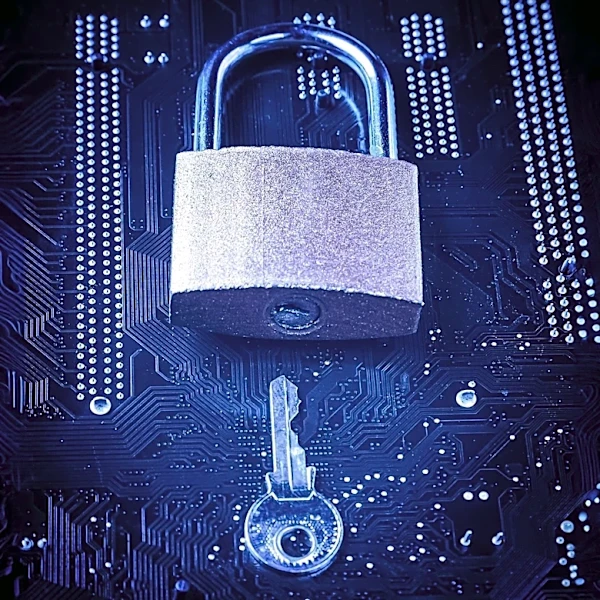
Imagine you want people to send you secret messages. You could give everyone a key to your mailbox, but that’s not very secure. Instead, you install a special mailbox. Anyone can drop a letter into the mail slot, but only you have the one-of-a-kind key to open
the box and retrieve the letters. This is the core idea of public key cryptography. The 'mail slot' is the public key, which you can share with anyone. They use it to encrypt, or scramble, a message for you. The 'mailbox key' is your private key, which you keep secret. Only your private key can decrypt, or unscramble, the message that was locked with your public key. This system, also called asymmetric cryptography, brilliantly solves the problem of how to share sensitive information without first having to secretly exchange a shared key.
The Catch: Making Unbreakable Keys
Here’s where the simplicity ends. These 'keys' aren’t metal; they're incredibly large numbers that are mathematically linked. The magic is that while they work together as a pair, you can’t figure out the private key just by looking at the public key. This is achieved using something called a 'trapdoor function'—a mathematical problem that’s easy to do in one direction but monumentally difficult to reverse. Think of mixing two specific colors of paint. It’s easy to mix them together to get a new color, but almost impossible to perfectly separate the original two colors from the mixture. The public key is like the mixed paint; the private key holds the secret knowledge of the original colors.
The Math That Forges the Fortress
The most famous 'trapdoor' problem involves prime numbers. The security of the widely used RSA algorithm, for example, rests on the fact that multiplying two enormous prime numbers together is easy for a computer. But trying to take the resulting product—a number hundreds of digits long—and figure out the two original prime numbers is practically impossible for even the most powerful supercomputers today. It’s the mathematical equivalent of being given a specific pile of sand and being asked to find the two exact grains that were used to create it. This computational difficulty is what makes the encryption a fortress. While someone might have your public key (the giant number), they can't use it to work backward and find your private key (the original primes).
Beyond Secrecy: Proving You're You
The genius of this system extends beyond just keeping secrets. By reversing the process, it can prove identity. If you encrypt, or 'sign', a message with your private key, anyone can use your public key to decrypt it. Since you are the only person with your private key, a successful decryption proves the message must have come from you and wasn't altered in transit. This creates a 'digital signature', the foundation of trust for secure websites (SSL/TLS certificates), verified software updates, and legally binding electronic documents. It's like having a unique wax seal that only you can apply, but everyone can recognize.
An Ever-Evolving Challenge
Public key cryptography isn't a static achievement; it’s an ongoing arms race. The strength of the encryption relies entirely on the difficulty of the underlying math problems. As computers get more powerful, the keys need to get longer and more complex to stay ahead of attackers. Furthermore, the horizon holds a new challenge: quantum computing. Researchers believe future quantum computers could be powerful enough to solve the mathematical problems that currently protect our data, potentially breaking today's encryption. This has sparked a global effort to develop new 'quantum-resistant' cryptographic methods to ensure our digital world remains secure for generations to come. The simple padlock icon belies a deep and constantly evolving field of human ingenuity.