





The Copper Era and Its Limits
For a long time, moving data was a matter of moving electrons. Copper wiring, used in everything from standard Ethernet cables to massive data center interconnects, has been the reliable workhorse of the digital age. It is cost-effective, mature, and its
supply chain is well-understood. However, copper relies on electrical current traveling through metallic conductors, which inherently possess resistance. This resistance means that as you push more data through a wire, you encounter two major enemies: signal loss and heat. In a typical office setting, a Cat5e cable is generally limited to about 100 meters before the signal becomes unreliable. While that is plenty for a home or an office floor, it is nowhere near enough for the massive scale required by modern computing.
The Physics of Light vs. Electricity
To understand why we are moving toward fiber optics, you have to look at how they actually work. While copper uses electrical pulses, fiber optic cables use light. These cables consist of thin strands of glass or plastic that rely on a principle called total internal reflection. Because the glass core has a high refractive index, light hitting the boundary at a shallow angle reflects back into the core rather than escaping. This allows light to travel much further than electricity can before it degrades. While copper struggles with electromagnetic interference and rapid signal attenuation at high speeds, fiber can carry data over several kilometers with much higher consistency. The main limitation for fiber is attenuation—the gradual loss of light due to absorption and scattering—but even then, it far outstrips the reach of high-speed copper.
The AI Speed Trap
The real catalyst for change isn't just distance; it is speed. We are currently entering an era defined by AI clusters—massive groups of accelerators that need to behave like a single, giant machine. This requires a scale-up fabric capable of moving massive amounts of data between chips almost instantaneously. Herein lies the problem: as data rates climb, copper's reach shrinks dramatically. At 100Gbps per lane, copper might reach five meters. At 200Gbps, that drops to 2.5 meters. By the time you hit 400Gbps, copper can struggle to maintain reliable connections even within a single server rack. We are essentially running out of room to use electricity to move this much information.
Silicon Photonics: The Next Frontier
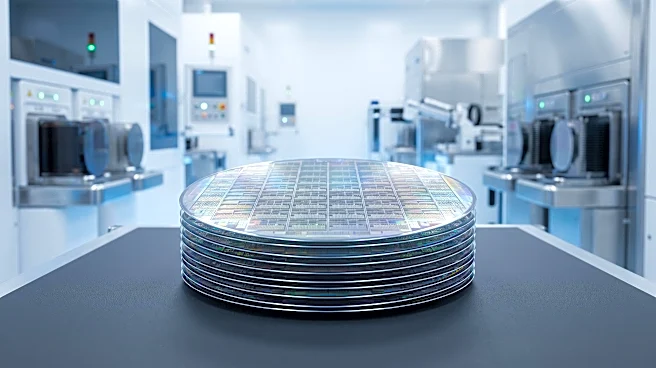
This physical bottleneck is forcing a shift toward silicon photonics. Instead of trying to force more electricity through metal, engineers are finding ways to move data as infrared light through waveguides etched directly into silicon chips. This removes the distance constraint that plagues electrical signals. The cutting edge of this movement is co-packaged optics, where the optical engine is placed inside the same package as the switch or accelerator itself. This minimizes the lossy electrical paths that consume so much power and degrade signals. By integrating photonic and electronic components on a single silicon die using standard CMOS manufacturing processes, we can finally produce optical components at the massive volumes required by modern gigawatt-scale data centers.