





First, What Is an 'AI PC'?
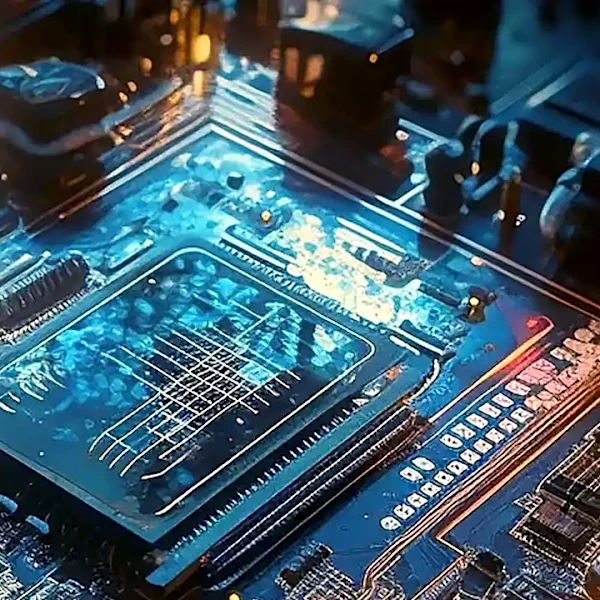
You've seen the marketing: laptops and desktops suddenly branded as “AI PCs.” But it’s not just a sticker. The key difference is the addition of a new piece of hardware called a Neural Processing Unit, or NPU. For decades, computers have relied on a Central
Processing Unit (CPU) for general tasks and a Graphics Processing Unit (GPU) for visual and parallel tasks. The NPU is a specialized third brain designed specifically to run artificial intelligence applications efficiently and locally, right on your device, instead of sending data to the cloud. This means faster AI-powered features, from real-time translation to smarter photo editing, all while using less battery and keeping your data more private. It's a fundamental shift in architecture, bringing the power of the AI data center directly into your machine.
The Old Security Playbook Is Outdated
Traditional cybersecurity has focused on protecting the digital perimeter. We build firewalls, scan for viruses targeting the CPU, and encrypt data on the hard drive. This model assumes a predictable flow of instructions and a clear boundary between safe and unsafe operations. The NPU shatters that assumption. It’s a new, semi-autonomous processor with its own firmware and direct access to data, creating an entirely new attack surface that old tools don't monitor. Vulnerabilities have already been discovered in NPU drivers from major manufacturers, showing how a malicious actor could gain elevated privileges or access data through this new channel. Thinking of the NPU as just another component is a mistake; it's a new actor on the system, and it requires its own security rules.
New Attack Vectors Emerge
With on-device AI, the threats are no longer just about viruses and malware; they are about manipulating the AI itself. Security experts are now focused on a new class of vulnerabilities. One major threat is 'adversarial attacks,' where an attacker makes tiny, almost invisible changes to an input—like a few pixels in an image or a subtle tone in an audio file—to trick the AI model into making a completely wrong decision. Another is 'model poisoning,' where the data used to train the AI is contaminated, creating a hidden backdoor the attacker can later exploit. There's also the risk of 'model extraction,' where an attacker can essentially steal the complex AI model—a company's valuable intellectual property—by repeatedly querying it. These aren't theoretical; they are active areas of research for hackers and security professionals alike.
Building a Smarter Security Blueprint
This is why AI PCs need new threat models. A threat model is a structured way of thinking like an attacker: identifying what you want to protect and who might want to harm it. For AI PCs, this means moving beyond the perimeter and securing the AI pipeline itself. The new model must treat the AI model as a critical asset, just like a password database. It requires securing the data the AI is trained on, validating the inputs it receives in real-time to check for adversarial attacks, and monitoring the NPU's behavior for anomalies. It also means creating strict access controls for the NPU, ensuring that only trusted applications can use it. Security is no longer just about preventing a break-in; it's about ensuring the integrity and reliability of the AI's decisions.