






The Case for a Bubble
The arguments for a bubble are easy to spot and feel eerily familiar to anyone who remembers the dot-com era. Valuations are stratospheric, with leading AI stocks trading at price-to-sales ratios above 30, a level that has historically preceded sharp
corrections. Much of the stock market's recent gains have been driven by a handful of tech behemoths, creating a narrow rally that makes investors nervous. Market concentration around companies like Nvidia, which at one point made up over 7% of the S&P 500, is a classic warning sign. Skeptics also point to a potential circularity in spending: large tech companies invest in AI startups, which then spend that money on cloud services and chips from those same tech giants, creating an echo chamber of demand. Baidu's CEO Robin Li recently warned that if the AI application layer fails to generate real profits soon, market fears of a bubble could become a reality. There are already signs of a reckoning, with some companies taking billion-dollar write-downs on AI infrastructure they invested in 'ahead of demand' that has yet to fully materialize.
The Infrastructure Boom Argument
On the other side of the debate is a powerful counter-narrative: this isn't a bubble, but the beginning of the largest infrastructure project in human history. Proponents argue that comparing this moment to the dot-com bust misses a crucial difference. Back then, companies were fueled by speculative venture capital and debt; today, the giants like Microsoft, Amazon, and Google are funding their massive data center investments primarily with their own massive cash flows. Global AI spending is projected to surpass $2.5 trillion in 2026 alone, with nearly half of that dedicated to foundational infrastructure like data centers and chips. Unlike the dot-com era's vague promises, enterprise adoption of AI is real and accelerating. In 2026, 78% of Global 2000 companies had at least one AI workload in production, a huge jump from 41% in 2024. This isn't just about chatbots; it's about redesigning core business workflows, from customer support automation to software engineering, that are delivering measurable returns on investment.
Nvidia: Bellwether or Rorschach Test?
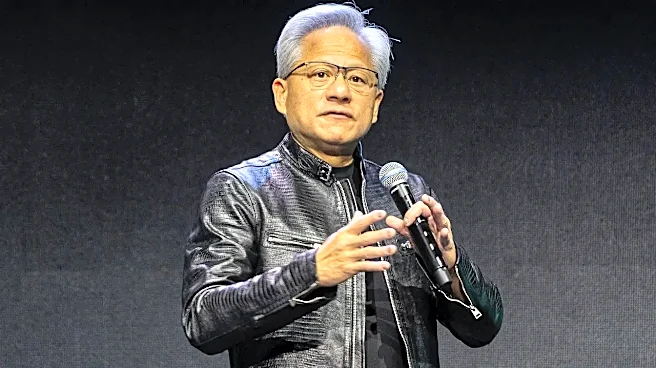
Nvidia's quarterly results, expected today, November 17th, sit at the heart of this debate. The company has become the ultimate proxy for AI sentiment. Another quarter of explosive growth in its Data Center division, which analysts expect, would fuel the 'infrastructure boom' narrative. It would suggest that the hyperscalers and enterprises building out their AI capabilities are not slowing down. However, bears will be watching closely for any sign of weakness. They'll scrutinize guidance for future quarters and listen for any commentary suggesting that customers are moderating their purchasing pace. The bubble camp can interpret even stellar results as a sign of peak mania, arguing that such growth is unsustainable. This makes Nvidia's earnings less of a verdict and more of a Rorschach test, where both bulls and bears can find evidence to support their worldview.
What to Watch Next
If one company's earnings can't settle the matter, what will? The real answer will emerge over the next 12 to 24 months and will depend on factors far beyond Nvidia's sales figures. The first is the broadening of the boom. For the rally to be sustainable, the success stories need to extend beyond a few infrastructure giants. We need to see widespread, profitable AI applications taking hold across various industries. Research from MIT shows that while AI adoption is growing, it's still shallower than headlines suggest, with only about half of tech firms and a tiny 4% of financial services firms having 'deeply embedded' AI by the end of 2025. The second factor is a durable return on investment. Companies have poured trillions into this build-out. Now they need to show that this spending translates into higher productivity and profits, not just higher costs. If monetization falls behind the massive investment, the bubble narrative will gain significant ground.