



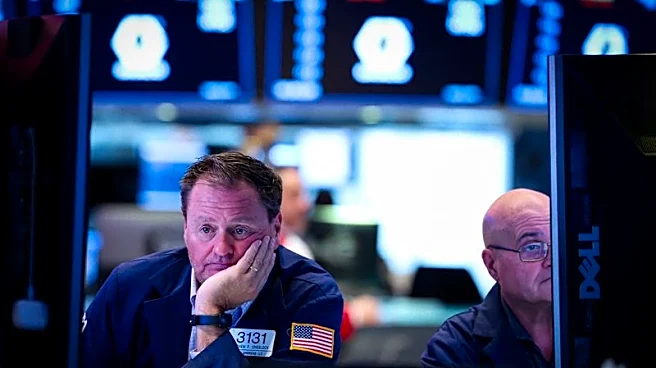

The AI revolution is here, and tech giants are spending trillions to lead it. But when they announce these massive investments, why do their stock prices often tremble? It's a paradox that gets to the heart of Wall Street's biggest fear.
First, What Is 'CapEx' Anyway?
Before diving
into the anxiety, let's clarify the term at its center: capital expenditure, or 'CapEx'. In the simplest terms, CapEx is money a company spends on physical assets that will be used for more than a year. For your local pizza shop, it’s a new oven. For tech giants building artificial intelligence, it’s an almost unimaginably expensive shopping list: sprawling data centers, specialized computer chips (like GPUs), and the networking and power systems to connect it all. Unlike operating costs like salaries, which are expensed immediately, these massive upfront investments are paid for now but are supposed to generate value for years to come. That gap between 'paying now' and 'profiting later' is where the trouble begins.
The Profit Margin Squeeze
Investors in publicly traded companies are famously focused on quarterly earnings. They want to see consistent, predictable profit growth. Massive CapEx throws a wrench in that. Spending hundreds of billions of dollars on AI infrastructure—Amazon, Google, Meta, and Microsoft are on track to spend a combined $745 billion in 2026 alone—directly impacts a company’s free cash flow. This is the cash left over after a company pays for its operations and capital expenditures. When CapEx surges, free cash flow can plummet or even turn negative, as seen recently with Meta. That forces companies to take on more debt or issue new stock to fund their ambitions, creating risk and spooking investors who see short-term profitability being sacrificed for a long-term, uncertain payoff.
The Ghost of Bubbles Past
Wall Street has a long memory. The current AI spending boom echoes historical infrastructure booms, like the railroad expansion in the 19th century and the dot-com bubble's fiber-optic rollout in the late 1990s. In both cases, the technology was revolutionary, but the initial phase involved massive overinvestment, fierce competition, and ultimately, poor returns for many of the companies that built the infrastructure. Research shows a persistent pattern: companies that aggressively expand their assets often underperform their more conservative peers. Investors now are asking a critical question: is this time different? While AI is undeniably transformative, there's a real fear that not every dollar spent on a new data center or AI model will generate a profit, leading to trillions in spending being at risk if revenue doesn't materialize as hoped.
An Arms Race Nobody Can Afford to Lose
Perhaps the biggest driver of anxiety is that this level of spending isn't really a choice. For today’s tech titans, investing in AI infrastructure is seen as essential for survival and market position. Falling behind in the race to build the most powerful models means risking total irrelevance. This creates a highstaked 'prisoner's dilemma,' where every company must keep spending aggressively because their competitors are doing the same. This dynamic reassures investors that companies are committed, but it also means the spending is unlikely to slow down. Investors are caught in a bind: they worry when companies spend too much, but they also get nervous if a company cuts its CapEx forecast, as it might signal a loss of confidence or that underlying demand is weakening.