








More Than a Horse Race
Walking the floor at a massive tech event like GITEX Global, it's easy to get caught up in the AI horse race. Who has the highest benchmarks? Whose model is 'smarter'? But for the thousands of business leaders and developers in attendance, the conversation
has matured. The real story isn't about crowning a single winner, but about understanding the fundamental trade-offs each of the major players represents. Choosing an AI partner in late 2026 is like picking a vehicle: you don't buy a sports car to haul lumber. The decision hinges on whether your priority is raw, untamed power, ironclad safety and reliability, or seamless integration into the tools you already use every day. As the initial hype of generative AI settles, these strategic differences are what truly matter.
OpenAI: The Unrivaled Power Play
OpenAI remains the name most associated with raw AI capability. Their models, from the GPT series to the newer Terra family, are often seen as the performance leaders, pushing the boundaries of what's possible in reasoning and creative generation. The trade-off? This cutting-edge power comes with a different set of considerations. For businesses, adopting the most powerful model means navigating higher costs, managing faster-but-sometimes-less-predictable outputs, and staying on top of a rapidly evolving platform. It's the choice for teams that want the absolute pinnacle of performance and are equipped to build the necessary guardrails themselves. This makes OpenAI the go-to for startups and innovation labs aiming to build genuinely new applications that rely on state-of-the-art intelligence.
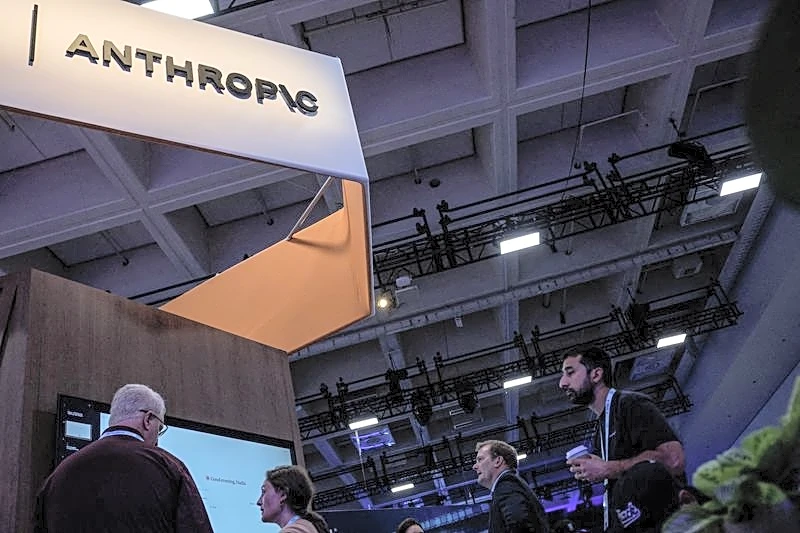
Anthropic: The Enterprise Safety Bet
Anthropic has carved out a distinct and powerful niche by prioritizing safety, reliability, and predictability. With its Claude family of models, the company has heavily invested in 'Constitutional AI'—a framework designed to make models more controllable and less likely to produce harmful or unpredictable content. This resonates deeply with enterprise customers, especially in regulated industries like finance, healthcare, and law. The trade-off is clear: you might be sacrificing a fraction of the absolute bleeding-edge performance for a model that is significantly more dependable and easier to align with corporate policy. For a large, brand-conscious company, avoiding a single major AI-related PR disaster is worth more than any incremental performance gain. Anthropic's focus on this reliability makes it the preferred choice for deploying AI in mission-critical, customer-facing, or legally sensitive workflows.
Google: The Integration King
Google's strategy is built on a powerful home-field advantage: its sprawling ecosystem. With its Gemini models deeply woven into Google Workspace, Google Cloud Platform, and even consumer products, the value proposition is one of seamless integration. For the millions of companies already running on Google's infrastructure, using its AI feels like a natural extension. The trade-off here is one of convenience versus specialization. While a Google model like Gemini might be incredibly powerful for analyzing data within BigQuery or summarizing a month's worth of Gmails, it might not outperform a specialized model from OpenAI or Anthropic on a specific, standalone task like advanced code generation. Choosing Google is a bet on the power of the platform, where the whole is greater than the sum of its parts, making it the default for organizations heavily invested in the Google ecosystem.