




The GPU Is Only Half the Battle
Imagine an auto factory where state-of-the-art robots can assemble a car in minutes, but the conveyor belts that deliver parts move at a crawl. The robots would spend most of their time idle, waiting for materials. This was the looming problem for AI
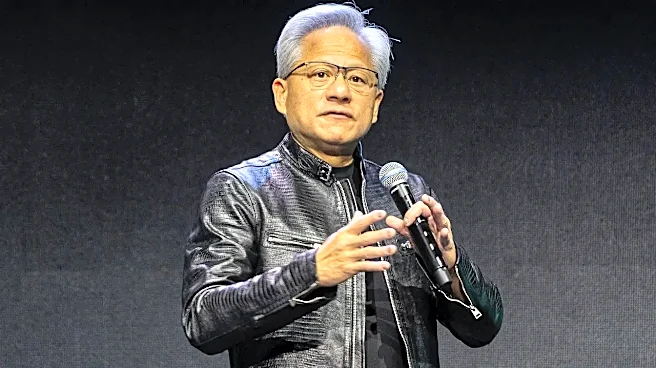
data centers. By the late 2010s, Nvidia's GPUs were becoming incredibly powerful, capable of processing immense datasets for training AI models. But there was a catch: training a single large model required hundreds or even thousands of GPUs working in concert. These GPUs needed to constantly exchange massive amounts of data with each other. A standard data center network simply couldn't keep up. The network, once considered simple plumbing, was becoming the primary bottleneck. No matter how fast the chips got, their potential was capped by the speed at which they could communicate. Nvidia CEO Jensen Huang recognized that selling faster chips into a slow system was a dead end.
Enter Mellanox: The King of Connectivity
While Wall Street saw Nvidia as a graphics chip company, Huang was looking at the entire data center as a single, holistic computer. To make that vision a reality, he needed a specialist in high-speed data transit. That specialist was Mellanox, an Israeli company that was the undisputed leader in a technology called InfiniBand. Unlike standard Ethernet, InfiniBand was designed from the ground up for high-performance computing (HPC) and supercomputers. It offered ultra-low latency and massive throughput, allowing data to move between servers with minimal delay. Crucially, Mellanox’s technology allowed for Remote Direct Memory Access (RDMA), which lets a server’s network card pull data directly from a GPU’s memory without bothering the main processor (CPU). This direct path was the missing link, the high-speed conveyor belt needed to keep the GPU 'robots' fed and working at maximum efficiency.
The $6.9 Billion Bet on the Bottleneck
In March 2019, Nvidia announced it would acquire Mellanox for approximately $6.9 billion, outbidding rivals like Intel. To many analysts, the move was puzzling. Why was a GPU maker spending billions on a niche networking company, especially when the crypto-driven GPU boom had just busted? But Huang wasn't buying a company; he was buying control over the future bottleneck of AI. The acquisition, which closed in April 2020, wasn't about cutting costs or merging similar product lines. It was a strategic move to transform Nvidia from a component supplier into a full-stack systems provider. Instead of just selling the engines (GPUs), Nvidia could now sell the entire high-performance vehicle: an integrated package of computing, networking, and software designed to work together seamlessly.
Building the 'AI Factory'
With Mellanox integrated, Nvidia began marketing the concept of the 'AI factory'. This wasn't just a server rack; it was a complete, fine-tuned computing instrument. Nvidia's DGX systems, which bundle multiple GPUs together, were now paired with Mellanox's ConnectX network cards and Spectrum switches. The company’s proprietary NVLink technology handled communication between GPUs inside a single server, while the Mellanox InfiniBand fabric connected thousands of nodes across the data center. This vertical integration gave customers a powerful proposition: a one-stop shop for building a supercomputer. Instead of struggling to optimize components from different vendors, they could buy a pre-validated, high-performance stack from Nvidia that just worked. This dramatically simplified deployment and accelerated time-to-market for companies building large-scale AI models.
The Payoff: A Networking Juggernaut
The strategic foresight has paid off spectacularly. Nvidia's networking business has exploded, becoming a massive revenue driver in its own right. Fueled by the generative AI boom that started in 2023, the division's revenue has skyrocketed. In recent quarters, Nvidia's networking revenue has even surpassed the total revenue of legacy networking giants like Cisco. The Mellanox acquisition provided not just hardware, but the crucial interconnect tissue that allows Nvidia to sell entire AI clusters at a premium. It created a powerful ecosystem lock-in, where the performance benefits of the tightly integrated stack make it difficult for customers to switch to competing solutions. What once looked like an expensive distraction is now recognized as one of the most prescient acquisitions in tech history, cementing Nvidia's position at the heart of the AI revolution.