









1. Design Thinking
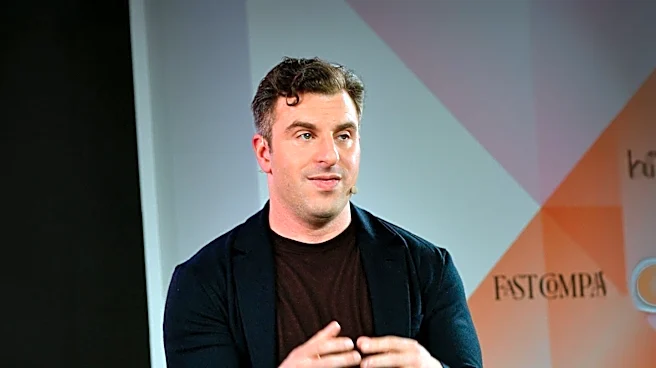
This one’s almost too obvious, but it’s the foundation of everything. Chesky is a graduate of the Rhode Island School of Design (RISD), not a business school. Design Thinking is a process that prioritizes empathy for the user to solve complex problems.
It’s not about making things pretty; it’s about understanding how they work and feel. For Chesky, this means obsessing over the guest and host experience. He has famously championed principles like the "Eleven-Star Experience" to push his team to imagine the perfect journey and work backward. His personal involvement in product reviews and app redesigns, even at a massive scale, shows a commitment to this framework that is rare among public company CEOs.
2. First Principles Thinking
Popularized by figures like Elon Musk, this framework involves breaking a problem down to its most basic, fundamental truths and reasoning up from there. Instead of looking at the hotel industry and asking, “How can we build a better hotel?” Chesky and his co-founders asked more fundamental questions: “Why do people travel? What if you could stay in someone’s home? What would it take to make a stranger trust another stranger?” This allowed them to build a solution for lodging that was completely untethered from the assumptions of the existing hospitality industry, leading to the creation of an entirely new market.
3. Jobs to Be Done (JTBD)
The Jobs to Be Done framework posits that customers don’t buy products; they “hire” them to do a “job.” A person doesn't just hire a drill because they want a drill—they hire it to get the job of hanging a picture done. Chesky intuitively understands that people don't hire Airbnb just to book a room. The deeper “job” is to experience a place like a local, to find a sense of belonging, or to facilitate a flexible, nomadic lifestyle. This focus explains Airbnb's strategic moves beyond just lodging, such as Experiences and its embrace of long-term stays, which serve the underlying user goal of connection and integration, not just accommodation.
4. The Crisis as a Catalyst
Many leaders see a crisis as something to survive; Chesky sees it as an opportunity to clarify. When the COVID-19 pandemic caused Airbnb's business to drop 80% in eight weeks, he called it a “near-death experience” that forced the company to get back to its roots. He stripped away side projects and refocused the entire organization on its core business: hosting. This framework—using an existential threat to burn away distractions and double down on the central mission—was instrumental in Airbnb’s stunning turnaround and successful IPO just months later.
5. Category Design
Why compete when you can create? Category Design is a strategy focused not on beating competitors in an existing market, but on creating and dominating a new one. Airbnb didn't just build a better booking website; it designed and evangelized the category of “peer-to-peer home sharing.” By defining the problem, providing a unique solution, and telling a compelling story, Airbnb became synonymous with its category. This makes competitors seem like followers, as they are forced to play by the rules Airbnb established. Chesky’s vision was never just to win market share from hotels, but to create a fundamentally different way to travel.
6. Stakeholder Capitalism
While shareholder primacy dictates that a company's main duty is to its investors, stakeholder capitalism argues for balancing the needs of all stakeholders: customers, employees, suppliers, and the community. Chesky has often acted with this broader view. His public letter to employees during the 2020 layoffs was praised for its empathy and transparency, offering extended severance and support. He also overrode host cancellation policies to refund guests during the pandemic's outset, prioritizing the user relationship over short-term revenue—a classic stakeholder-oriented move that builds long-term brand trust.
7. Blitzscaling
Coined by LinkedIn co-founder Reid Hoffman (who is also an an Airbnb board member), Blitzscaling is the practice of prioritizing speed over efficiency in the face of uncertainty to achieve massive scale and become the first-scaler in a market. Airbnb is a textbook example. In its early days, it faced clones and competitors globally. To win, it had to grow at a breakneck pace, capturing markets like Europe before rivals could gain a foothold. This meant accepting chaos and embracing a “do-or-die” mentality to establish the network effects—more hosts attract more guests, and vice-versa—that now form its competitive moat.