






A World of Walled Gardens
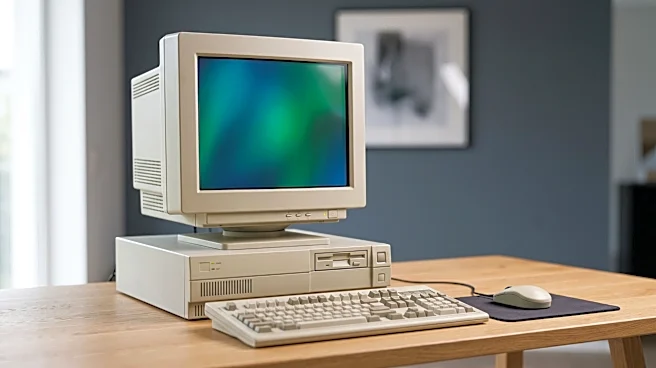
Cast your mind back to the early 1990s. The operating system landscape was dominated by giants. Microsoft had a stranglehold on desktops with Windows, while expensive, proprietary versions of Unix ran on powerful servers and workstations. In this world,
source code was a jealously guarded secret, locked away by corporations. The idea of sharing it was antithetical to the entire business model. Amidst this, the free software movement, championed by Richard Stallman and the GNU Project, was crafting an alternative universe of tools, but it was missing a critical component: a functional, free kernel to build a complete operating system upon.
The Critical 'Copyleft' Decision
When a Finnish student named Linus Torvalds first released his hobby kernel, 'Linux', in 1991, he used a custom license that forbade commercial use. He quickly realized this was a mistake and, by 1992, made the pivotal choice to switch to the GNU General Public License, version 2 (GPLv2). This wasn't just any open-source license. Unlike more 'permissive' licenses (like MIT or BSD) that let anyone take the code and make it proprietary, the GPL had a powerful, reciprocal clause known as 'copyleft'. This rule states that if you modify GPL-licensed code and distribute your new version, you must release your changes under the same license. In short, you have to share your improvements back with the community.
Building an Army, Not Just an OS
This 'forced to give back' mechanism was a masterstroke. It solved what's known as the 'free-rider' problem. A company couldn't just take the Linux kernel, add its own secret sauce to make it better, and sell a closed-off product. If a company like IBM, SGI, or Red Hat wanted to use and improve Linux for their own hardware or enterprise products, they were legally obligated to contribute their modifications back to the main project. This created a powerful, self-reinforcing cycle of development. Torvalds himself has said the GPL was a defining factor in Linux's success because it prevented the kind of fragmentation that had plagued Unix's history. It ensured that everyone's efforts, even those of fierce competitors, ultimately strengthened the same central codebase.
A Foundation of Trust
The GPL did more than just compel collaboration; it built trust. Individual programmers and large corporations alike knew that their contributions could not be hijacked and locked away by a competitor. This assurance was vital for getting corporate giants to invest millions in improving the kernel. A developer at one company could confidently submit a patch, knowing a rival firm couldn't privatize their work. This legal framework essentially created a level playing field, turning a loose collection of developers into a global, decentralized R&D department thousands of companies strong. As Torvalds once put it, permissive licenses are 'great for code you don't care about', but the GPL 'ensures that nobody is ever going to take advantage of your code'.
The Legacy in Your Pocket and the Cloud
The impact of this decision is hard to overstate. Without the GPL, Linux might have splintered into dozens of incompatible, proprietary versions, just like Unix did before it. Instead, it became a stable, universal commons. This stability is why Google could use the Linux kernel as the foundation for Android, which now powers the majority of the world's smartphones. It's why virtually the entire cloud computing industry, from Amazon Web Services to Google Cloud, is built on top of Linux. All of the world's top 500 supercomputers run on Linux. The code was brilliant, but the license was the strategic decision that ensured its brilliance would be shared, compounded, and ultimately, come to dominate the world of computing.