



Want to predict the next decade? There's a machine learning model for that—sort of. It's called a Gaussian Mixture Model (GMM), but it's not a crystal ball. It's a powerful tool for finding hidden patterns, not telling the future.
What is a GMM, in Simple Terms?
Imagine you're looking
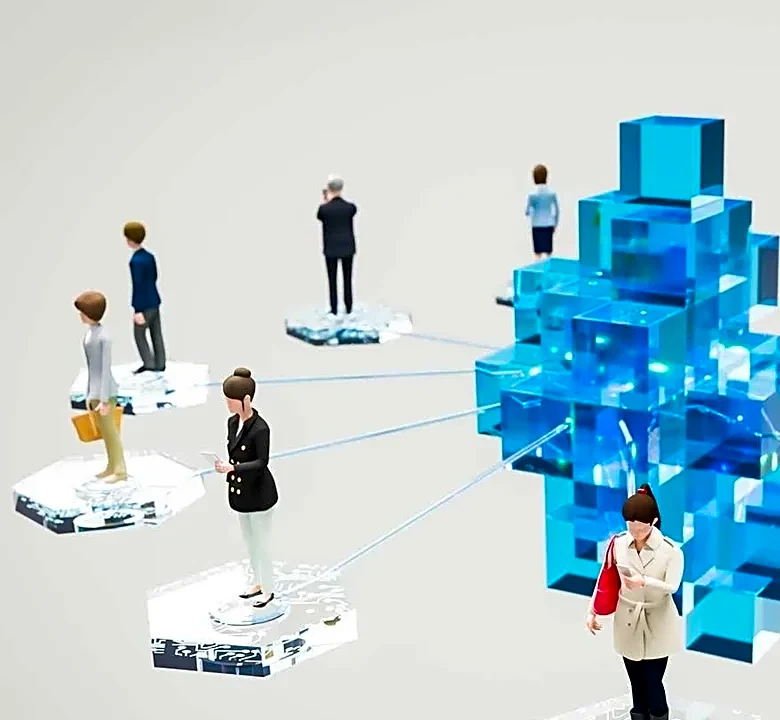
at a crowded park from above. You can see distinct groups of people: families having picnics, kids on the playground, and teenagers playing soccer. A Gaussian Mixture Model is like a smart system that, instead of seeing one big crowd, identifies these underlying groups automatically. It assumes the entire crowd is a 'mixture' of several smaller, distinct groups (or 'Gaussian distributions'). Each group has a center (its mean), a shape (its covariance), and a size (its weight). Unlike simpler methods that force each person into exactly one group, GMMs use 'soft clustering'. This means the model can say a person has a 70% chance of belonging to the 'picnic' group and a 30% chance of belonging to the 'playground' group—perfect for capturing people who wander between activities. It’s this probabilistic approach that makes GMMs so flexible for understanding complex, overlapping data.
So, What Do They 'Predict'?
Here’s where the headline gets tricky. GMMs don't 'predict' the future in the way a weather forecast predicts rain. Instead, they make predictions about probability and structure within your current data. Their main job is to find the hidden clusters or subpopulations. Once a GMM has learned these groups, it can do two powerful things. First, it can take a new piece of data—say, a new customer—and predict the probability that they belong to each of the identified clusters (e.g., 'high-spenders,' 'deal-seekers,' 'occasional shoppers'). Second, it can perform 'density estimation'. This means it learns the overall landscape of your data, allowing it to identify which kinds of data points are common and which are rare. A GMM's 'prediction' is less 'what will happen next year' and more 'based on the patterns we've seen, this new thing looks like it belongs to Group A, and it's either very normal or highly unusual'.
Real-World Examples in Business
You're probably interacting with the results of GMMs already. In marketing, companies use them for sophisticated customer segmentation. Instead of putting customers in rigid boxes, GMMs identify nuanced groups, like 'transitional users' who are drifting from active to inactive, allowing for targeted re-engagement campaigns. Financial institutions use them for anomaly detection, modeling 'normal' transaction behavior to flag unusual activity that could indicate fraud. The model identifies that a specific transaction has a very low probability of belonging to any normal spending cluster, raising an alert. They're also used in image recognition for segmenting parts of an image, in speech recognition, and even in recommender systems that group users with overlapping tastes to provide more personalized suggestions.
The Limits: What GMMs Can't Predict
The biggest misconception is that a GMM can forecast long-term, narrative events about the next decade. It can't. A GMM has no understanding of causality, context, or 'black swan' events. It can model financial data, but it couldn't have predicted a global pandemic's effect on the market. It works with the data it's given, assuming future patterns will resemble past ones. The model's effectiveness also depends heavily on choosing the right number of clusters and on its random starting point, as it can sometimes find a less-than-perfect solution. Furthermore, GMMs can be computationally expensive and may struggle with extremely large datasets or data that doesn't fit a bell-curve (Gaussian) shape. They are powerful for understanding existing complexity, not for prophesying future disruptions.