
Beyond the Mesh: The Arrival of Long Range
For two decades, Z-Wave’s strength has been its mesh network, where devices relay signals to one another, creating a resilient, self-healing web of communication. But that model has its limits in large
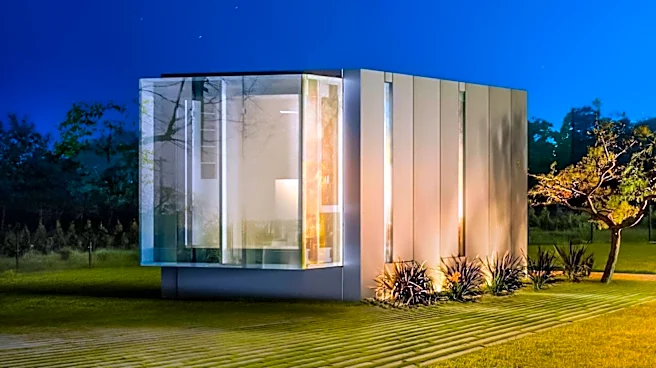
homes or properties with detached buildings. Enter Z-Wave Long Range (LR), a game-changing update that fundamentally alters the network’s architecture. Instead of hopping from device to device, Z-Wave LR products can communicate directly with the hub from up to a mile away in open air. This star network topology coexists with the traditional mesh, offering the best of both worlds. In a production system, this means a motion sensor at the end of a long driveway or a smart lock on a workshop hundreds of feet away can now be a reliable part of your network without a chain of repeater devices. The Z-Wave Alliance has noted a massive shift, with 80% of new products submitted for certification now seeking ZWLR approval, making it the new default.
The 800 Series: More Power, Less Thirst
Powering this new era of Z-Wave is the 800 series of silicon from Silicon Labs. While the 700 series first introduced Long Range capabilities, the 800 series perfects it with a more powerful and efficient radio. The benefits are tangible for anyone managing a fleet of devices. Compared to the 700 series, these new chips offer significantly better battery life—in some cases, up to 10 years from a single coin cell—by dramatically reducing power consumption. This is a huge win for low-touch “install and forget” devices like water sensors and door/window contacts. The 800 series also incorporates enhanced security features like Secure Vault, offering a hardware-level defense against tampering that brings devices up to PSA Certification Level 3 security. This combination of efficiency and robust security makes the hardware an ideal foundation for the next generation of reliable smart home devices.
An Open Standard in a Matter World
No conversation about the future of the smart home is complete without mentioning Matter, the industry-unifying standard backed by giants like Apple, Google, and Amazon. But instead of a battle, the relationship between Z-Wave and Matter is shaping up to be one of strategic coexistence. Matter primarily operates as an application layer over IP-based networks like Wi-Fi and Thread. Z-Wave, on the other hand, is a full-stack protocol that operates on its own sub-GHz frequency, which is less crowded and better at penetrating walls. The Z-Wave Alliance, which now operates as a member-driven standards development organization, sees the two as complementary. Hubs and bridges are the key, translating between the two ecosystems. This allows a robust, secure Z-Wave network for critical infrastructure like locks, sensors, and switches to run independently while still being exposed to and controlled by a broader Matter-enabled ecosystem. This approach lets each protocol do what it does best.
What This Means for a Production System
Bringing it all together, the future of Z-Wave in a real-world, "production" smart home is one of specialized strength and increased flexibility. A modern system can now be a hybrid, using Z-Wave LR devices for far-flung sensors, a traditional Z-Wave mesh for dense areas of switches and plugs inside the home, and a bridge to make everything visible to Matter-compatible apps and voice assistants. The enhanced battery life from 800 series chips means less maintenance and more reliability for critical alerts. The move to an open standard, driven by the Z-Wave Alliance and its members, fosters more competition and innovation from device makers. For homeowners and installers, this translates to a more scalable, secure, and resilient system that is no longer confined by the four walls of the house, proving that Z-Wave isn't just surviving—it's thriving by evolving for the demands of the modern connected world.