


From Graphics King to Data Center Architect
For years, Nvidia has been the undisputed king of the silicon powering artificial intelligence. Its graphics processing units (GPUs) became the brains behind the generative AI boom, making the company a multi-trillion dollar behemoth. But as AI models
grow exponentially larger, a critical bottleneck has emerged that has nothing to do with the chips themselves: the network. Training a single massive AI model can involve thousands of GPUs working in concert, and the performance of the entire system is only as fast as the connections between them. This is where Jensen Huang's masterstroke comes into play. In 2020, Nvidia made what now looks like a profoundly visionary move, acquiring networking specialist Mellanox Technologies for $7 billion. At the time, it was the company's largest-ever acquisition, a bet that the future of AI wasn't just about processing power, but about the seamless, high-speed movement of data.
Solving the AI Traffic Jam
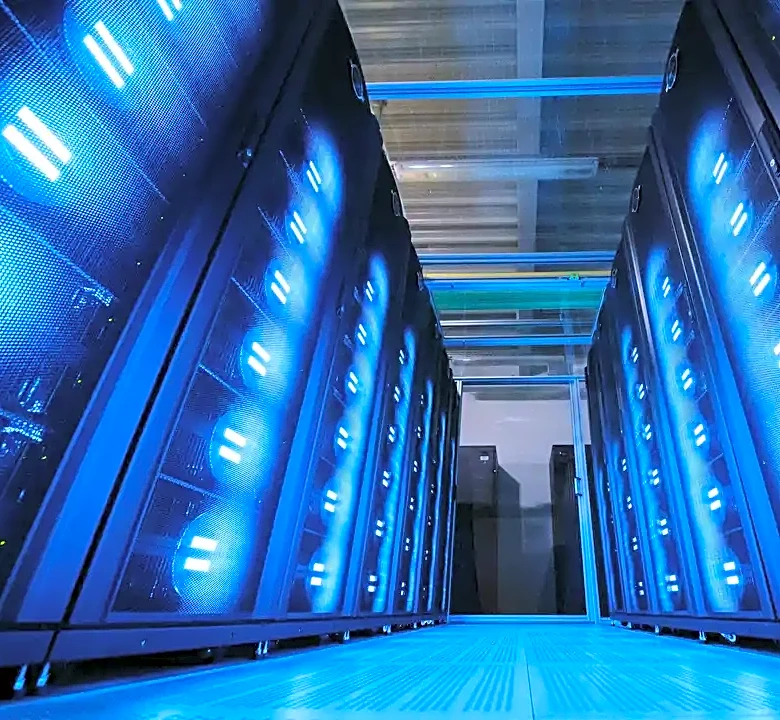
Think of an AI data center as a city. The GPUs are the factories and offices where the work gets done, but they're useless without roads to move goods and people between them. As you build more factories, you create more traffic. Standard networking, or 'off-the-shelf Ethernet,' can quickly become a congested nightmare, suffering from the data equivalent of traffic jams that leave expensive GPUs sitting idle. This is the problem Nvidia is solving. Its networking portfolio, including InfiniBand and the AI-focused Spectrum-X Ethernet platform, acts as a purpose-built superhighway for AI traffic. Technologies like adaptive routing and advanced congestion control ensure data flows with minimal latency and packet loss, which is critical for the massive, parallel computing tasks of AI. Huang himself refers to this networking fabric as the 'nervous system of the AI factory,' enabling millions of GPUs to function as a single, giant computer.
The 'Full Stack' Moat
By integrating high-performance networking with its world-beating GPUs, Nvidia has created a powerful, vertically integrated platform. This 'full-stack' approach—spanning from chips to interconnects to software like CUDA—is the company's true competitive advantage. Customers aren't just buying components; they are buying a pre-optimized, end-to-end system for building and running AI. This ecosystem makes it incredibly difficult for competitors to challenge them on any single front. A rival might produce a competitive chip, but without the tightly integrated networking fabric, it can't match the overall performance of an Nvidia system. This strategy of selling the whole 'AI factory'—not just the processors inside it—has turned Nvidia's networking division into its second-largest business unit. Recent financial reports show the division generating over $31 billion in annual revenue, a figure that highlights its transformation from a strategic acquisition to a core pillar of the company.
A New Front in the Tech Wars
Nvidia's aggressive push into networking has put it on a collision course with established giants like Cisco and Arista Networks. The explosive growth is staggering; Nvidia's networking revenue in a single recent quarter reportedly surpassed the estimated annual data center networking revenue of Cisco. This isn't just about selling more hardware; it's about capturing a larger share of the colossal investment being poured into AI infrastructure globally. While GPUs remain the headline-grabbing star, the networking business provides a recurring, high-margin revenue stream that solidifies Nvidia's foundation. It transforms the company from a chip supplier into a comprehensive AI infrastructure provider, a position Huang has been driving towards for years. As companies and even entire nations build out their own sovereign AI capabilities, the demand for this complete, optimized infrastructure is only set to grow.