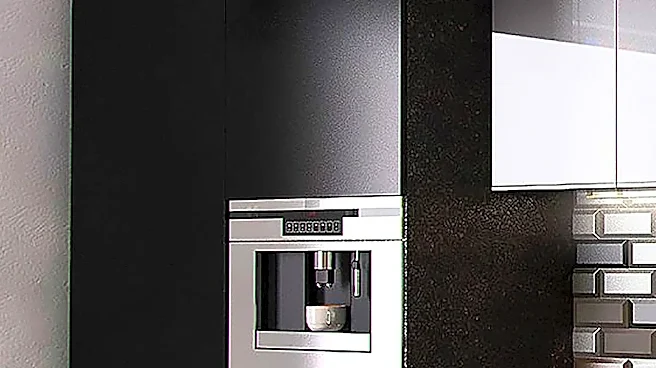








The New Kitchen Command Center
The kitchen is no longer just a place for food prep; it's a hub of activity and technology. Smart refrigerators with family calendars and streaming screens, ovens you can preheat from the office, and coffee makers that know your morning routine are now common.
Add in voice assistants for timers and recipes, smart lighting, and countertop gadgets like air fryers and pressure cookers that connect to apps for guided cooking, and you have a room demanding a significant amount of reliable bandwidth. These devices aren't just novelties; they offer real convenience, safety, and efficiency. You can get an alert if the fridge door is left open, download a new cooking mode for your oven, or ensure your stove is off after you've left the house. This evolution from a simple workspace to a connected hub means the demands on your home network have fundamentally changed.
Where Your Wi-Fi Signal Goes to Die
Unfortunately, the kitchen is one of the most hostile environments for a Wi-Fi signal. Your router, likely tucked away in a distant office or living room, has to push its signal through multiple walls just to get there. Once it arrives, it faces a gauntlet of signal-blocking materials. Large metal appliances like refrigerators and ovens are the worst offenders, reflecting and absorbing radio waves. Water, present in pipes and even the human body, also absorbs Wi-Fi signals. Dense materials like ceramic tile, stone countertops, and concrete or brick walls further weaken the connection. Even your microwave oven can cause interference, as it often operates on the same 2.4 GHz frequency as many Wi-Fi routers. The result is a recipe for disaster: dropped connections, lagging video recipes, and smart appliances that fail to respond when you need them most.
Planning for a Smarter Culinary Future
So, what’s the solution? It’s not necessarily about buying the most expensive internet plan. More often, it's about network design. For many modern homes, a single router is no longer enough to provide consistent coverage. This is where a mesh Wi-Fi system comes in. A mesh system uses multiple nodes placed around your home to create a seamless, powerful network that blankets every room, including the kitchen. By placing one of these nodes in or near the kitchen, you ensure your smart appliances have a strong, stable connection, bypassing the walls and interference that would otherwise cripple their performance. For those building or remodeling, running an Ethernet cable to a central spot in the kitchen for a dedicated Wi-Fi access point is an even more robust, future-proof solution. The goal is to treat the kitchen's connectivity with the same importance as its plumbing or electrical wiring.
The Payoff: Convenience, Not Complication
Investing in better networking for your kitchen isn't about adding complexity; it's about enabling simplicity. When your network is solid, smart appliances work as advertised. You can rely on your oven to preheat on your way home, trust that your smart dishwasher will send an alert when it's done, and follow a streaming cooking class on your smart display without constant buffering. It ensures the features you paid for—remote control, real-time alerts, and software updates that can add new functions—actually deliver on their promise. A strong network transforms a collection of individual gadgets into a truly integrated, responsive smart kitchen that makes daily routines easier, safer, and more efficient. It’s the invisible infrastructure that allows the heart of your home to keep up with modern life.