





The Familiar Battlefield: CPU vs. GPU
Let's quickly recap the basics most of us know. Central Processing Units (CPUs) are the workhorses of general computing. They have a few powerful cores designed to execute a wide variety of tasks sequentially, one after another, at incredible speeds.
They're like a master chef who can cook any dish you ask for, but only one at a time. Graphics Processing Units (GPUs), on the other hand, are specialists in parallelism. Originally designed for rendering video game graphics, they contain thousands of simpler cores that can perform the same, relatively simple calculation simultaneously on huge chunks of data. This made them accidentally perfect for the massive matrix multiplication at the heart of deep learning. Think of a GPU as an army of line cooks, all chopping onions at the same time. This parallel power is why GPUs became the default hardware for the AI revolution.
Enter the TPU: A Purpose-Built Contender
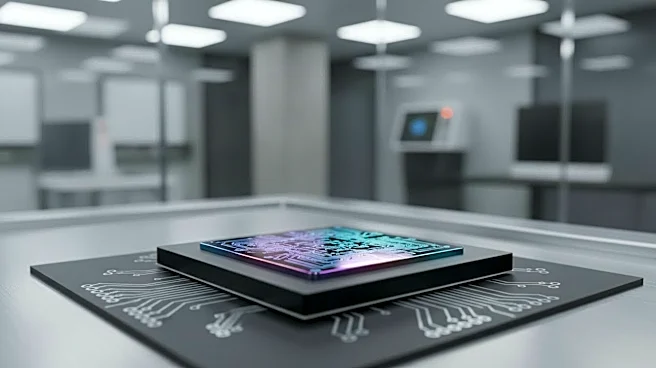
Now, enter the Tensor Processing Unit (TPU). Developed by Google, TPUs are Application-Specific Integrated Circuits (ASICs). This means they were designed from the ground up for one job and one job only: accelerating neural network computations. While a GPU was a happy accident for AI, a TPU is a deliberate, targeted weapon. They aren't meant to run your operating system or render graphics; they are built to handle the tensor operations used in machine learning with extreme efficiency. Many engineers stop here, thinking a TPU is just a more specialized, and perhaps faster, version of a GPU. But this misses the fundamental architectural leap that makes them so different.
The Hidden Detail: The Systolic Array
Here’s the detail that often gets lost in the shuffle: the heart of a TPU is a systolic array. The name comes from the way data pulses through the chip, like a heartbeat. A CPU or even a GPU constantly fetches data from memory, performs an operation, and writes the result back to memory. This back-and-forth movement, known as the von Neumann bottleneck, consumes a lot of time and energy. A systolic array works completely differently. Imagine a long line of factory workers. The first worker takes a part, performs one small task, and passes it directly to the next worker, who does the next task, and so on. Data flows through the TPU's grid of thousands of multiply-accumulator units in a similar rhythmic, pipelined fashion. Each value is loaded once and then reused as it travels across the array, with calculations happening at each step. This design drastically reduces data movement, which is a primary consumer of energy and a major bottleneck in computing. The chip isn't just running parallel operations; it’s a physical manifestation of dataflow, a hardware assembly line for matrix multiplication.
Why This Changes Everything for Developers
For a self-taught engineer accustomed to writing procedural or object-oriented code, this is a profound mental shift. You're no longer just writing instructions for a processor to execute; you're structuring data to flow efficiently through a specialized hardware pipeline. The very act of programming for TPUs, often via frameworks like TensorFlow or JAX, involves thinking about your data in terms of tensors and how they will move through the systolic array. Common issues like poor TPU utilization often stem from not feeding this beast correctly—for instance, using small batch sizes or having an input pipeline that can't keep up. It's not about loops and threads in the traditional sense. It’s about creating large, consistent batches of data that can be streamed through the chip to keep the systolic array constantly fed and working at peak efficiency. Missing this core concept is the difference between using a TPU and truly leveraging it.