


The Old Story: Power vs. Efficiency
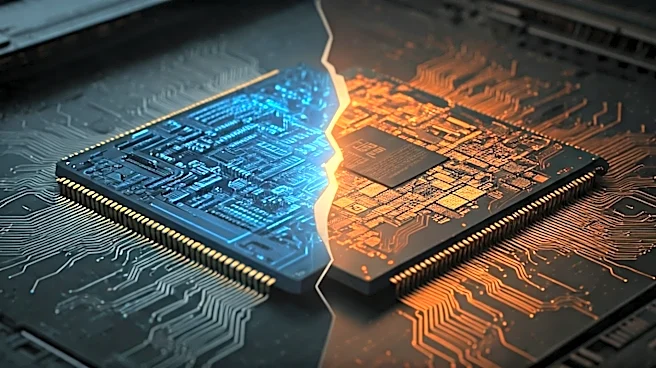
Let’s start with the narrative most of us learned. For decades, the world of processors was neatly divided. On one side stood x86, the architecture dominated by Intel and AMD. These were the engines of serious computing—the chips in your desktop and workhorse laptops. They were complex, powerful, and power-hungry, designed to tear through spreadsheets and high-end games, usually while tethered to a wall outlet. On the other side was ARM. These chips were the champions of efficiency. Designed from the ground up for low power consumption, they were perfect for devices that ran on batteries. Your smartphone, your tablet, your smart watch—they almost certainly run on an ARM-based chip. The trade-off seemed clear and permanent: you could have raw
performance (x86) or all-day battery life (ARM), but not both in the same package.
The Architect's Secret: Simple vs. Complex Tasks
The fundamental difference isn't really about power sockets; it's about philosophy. It boils down to RISC vs. CISC, which sounds intimidating but is actually a simple concept. x86 is a CISC, or Complex Instruction Set Computer. Think of it like a master chef who can understand a single command like "make a beef bourguignon." That one instruction triggers a whole series of complex, built-in actions. It’s powerful but requires a lot of sophisticated hardware to interpret.
ARM, on the other hand, is a RISC, or Reduced Instruction Set Computer. It’s like a line cook who only understands simple commands: "chop onion," "sear beef," "add wine." To make that same beef bourguignon, you have to give the line cook a long list of simple steps. This approach requires less complex hardware, which in turn uses less power. For years, the CISC approach was faster for complex tasks, but modern software and chip design have made the RISC approach incredibly efficient and surprisingly powerful, blurring the old lines.
It’s Not the Chip, It’s the Business Model
Here’s the part that gets lost in most technical debates: the business models are completely different, and it changes everything. Intel and AMD are primarily Integrated Device Manufacturers. They design their x86 chips, they manufacture them (or have them manufactured), and they sell them. They control the whole stack. You want an x86 chip? You're buying it from one of them.
ARM Holdings doesn’t sell chips. It sells recipes. ARM designs processor blueprints—the core architecture—and then licenses that intellectual property to anyone who wants to make a chip. Companies like Apple, Qualcomm, Samsung, and Nvidia take ARM’s designs, customize them for their specific needs, and then have them manufactured. Apple’s M-series chips are a perfect example: they are ARM-based, but they are uniquely Apple's design. This licensing model is why ARM is everywhere; it fosters a massive, diverse ecosystem of chipmakers all innovating on the same basic platform.
The Billion-Dollar Software Wall
So if ARM is so great, why aren't all our laptops running on it? The answer is one word: software. For over 40 years, the world’s most important applications, from Microsoft Office to Adobe Photoshop to countless corporate tools, have been written and optimized for x86. You can’t just run an x86 program on an ARM chip.
To bridge this gap, you need emulation—a software layer that translates x86 instructions into ARM instructions on the fly. It’s a bit like having a live interpreter between two people who don’t speak the same language. It can work, but it’s often slow, buggy, and drains the battery, negating ARM's main advantage. Apple sidestepped this problem by having absolute control over its hardware and software, creating a smooth transition with its Rosetta 2 emulator and pushing developers to create native ARM apps. Microsoft’s attempts with Windows on ARM have been far messier, because it has to support a chaotic universe of hardware from dozens of manufacturers.
The Great Convergence
The simple story of ARM vs. x86 is dead because both sides are now invading the other's territory. Spurred by Apple's success, ARM-based chips from companies like Qualcomm are now powerful enough to challenge mid-range x86 laptops, promising incredible battery life and instant-on performance. They are no longer just for phones.
Meanwhile, Intel and AMD aren't standing still. They are pouring billions into making their x86 chips more efficient, using new manufacturing processes and hybrid architectures that mix powerful cores with efficient ones—a trick they learned from ARM. The result is a messy, fascinating convergence where the goal for everyone is the same: to deliver the best possible performance-per-watt. The clear lines have been erased, and the winner will be determined not just by engineering, but by software support and business strategy.