






As Black Friday approaches, the hunt for cheap storage often feels like a consumer game. But for those building AI-driven RAG systems, these hardware discounts represent a critical window for scaling infrastructure.
The RAG Bottleneck
Retrieval-Augmented Generation (RAG)
is the technology that allows Large Language Models to look up specific, real-time information before generating an answer. It is the difference between an AI guessing based on old training data and an AI acting like a researcher with a library card. To make this work, you need a vector database—a specialized way of storing and searching through massive amounts of data. This process is incredibly hungry for high-speed storage. If your SSDs are slow, your AI's 'thinking' time skyrockets, making the system feel sluggish and unreliable. This is why the type of storage you buy matters just as much as the GPU you use.
Why Speed and Endurance are Non-Negotiable
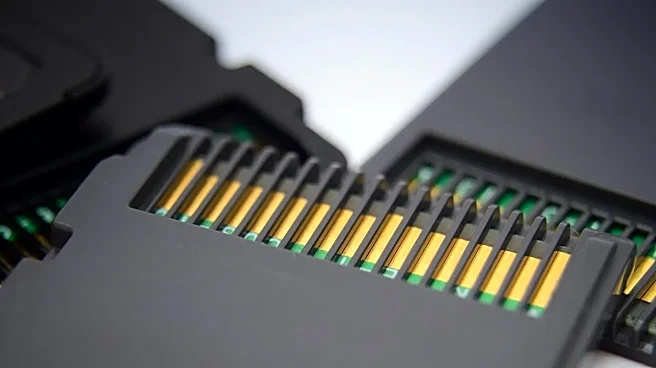
In a standard home computer, a budget SATA SSD might be fine for storing movies or games. In a RAG environment, that same drive could become a massive bottleneck. RAG systems rely on high-speed NVMe drives to perform rapid read operations when searching through vector embeddings. Furthermore, these systems often involve constant data ingestion and indexing, which puts a heavy load on the drive's endurance. For homelab enthusiasts or small-scale enterprise developers, finding high-end NVMe drives—like the Samsung 9100 PRO or similar high-performance models—at a discount is the difference between a responsive AI agent and a frustratingly slow one. The goal is to find drives that offer high IOPS (Input/Output Operations Per Second) without breaking the bank.
Navigating the Black Friday Illusion
If you are looking to upgrade your AI server this season, you have to be careful. The massive percent-off badges you see on sites like Amazon can be deceptive. During periods of NAND flash shortages, manufacturers often raise the 'list price' of a drive significantly. When a retailer then applies a discount to that inflated price, the badge might claim 50% off, even though the drive is actually more expensive than it was a month ago. For a developer trying to budget for a multi-terabyte storage array, these fake deals can ruin a procurement plan. The real way to judge a deal is to look at the price per terabyte (TB) and compare it to the historical median for that specific class of drive, rather than trusting the flashy marketing.
The AI Competition Factor
There is another reason why SSD prices might feel high this year: the AI boom. Enterprise-grade SSDs are currently in high demand to power massive AI training clusters and data centers. Because these large-scale players are buying up huge quantities of NAND flash, the supply for consumer and prosumer retail drives can tighten. This means that while Black Friday offers some genuine opportunities to snag high-capacity NVMe drives at lower-than-average prices, the overall cost of high-performance storage remains under pressure. Smart buyers should focus on drives that balance capacity with the specific speed requirements of vector databases.