










More Than a Digital Ghost Town
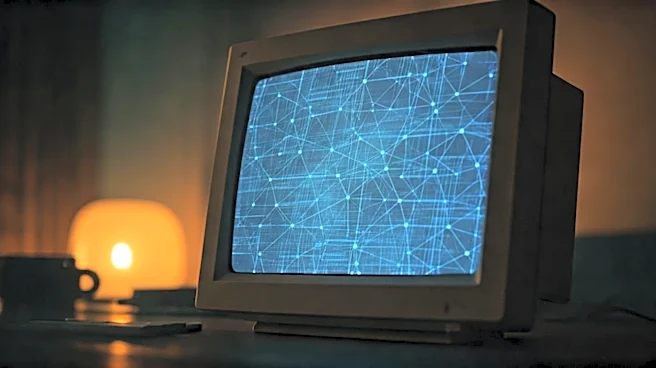
For anyone who didn't live through it, the BBS era sounds like a primitive relic. In a time before the World Wide Web, you’d use a modem to dial a specific phone number, connecting your computer directly to another one, usually sitting in a hobbyist’s
bedroom. You'd be greeted by a text-only screen, a digital clubhouse where you could post messages, download files, and play simple games. It was slow, hyper-local, and incredibly niche. But to dismiss it as a mere prototype for the internet is to miss the entire point. The headlines of the time, if there were any, focused on piracy or niche subcultures. The real story, however, wasn't the technology itself, but the philosophies embedded into it by its creators.
The Architects of Sharing
In 1978, during a blizzard in Chicago, Ward Christensen and Randy Suess launched CBBS, the first Computerized Bulletin Board System. It was revolutionary, creating a public space for digital messages. But their most important contribution wasn't the board; it was the protocol. Christensen wrote a program called XMODEM, a simple but robust way to transfer files from one computer to another without errors. Before this, downloading a file over a noisy phone line was a game of chance. XMODEM made it reliable. Christensen released it into the public domain, for free. He didn't patent it or form a company. He gave it away because the goal was to enable others to share. This act established a foundational ethos of the early digital frontier: collaboration and open access over commercialization. It was a principle, not a product, and it became the bedrock of the entire BBS ecosystem.
The Anarchist of Connectivity
If Christensen and Suess built the first digital clubhouse, Tom Jennings connected them into a nationwide neighborhood. In 1984, Jennings created FidoNet. It wasn't a centralized service like AOL would later become. Instead, it was a brilliantly scrappy, decentralized network. Using his FidoBBS software, individual system operators (SysOps) could schedule their computers to automatically call each other late at night—during a designated “Zone Mail Hour” when phone rates were cheap—to exchange bundles of messages. A message posted in San Francisco could ripple across the country to New York in a matter of days, passed from one BBS to the next. Jennings, a self-described anarchist, built a system that had no owner, no central authority, and no commercial motive. It was a network run by and for its users, a radical vision of peer-to-peer communication that stands in stark contrast to today's walled-garden social media platforms controlled by a handful of corporations.
The Unsung Community Managers
Beyond the marquee names were thousands of SysOps—the everyday people who ran these BBSs from their homes. They were the original online community managers, content moderators, and platform governors. Each BBS was its own tiny digital kingdom with its own rules and culture, shaped entirely by the personality of its SysOp. They curated file libraries, mediated disputes in message forums, and fostered a sense of belonging. They weren't paid; they did it for the love of the technology and the community. These SysOps were wrestling with questions we still struggle with today: What are the limits of free speech online? How do you build a healthy, non-toxic community? How do you verify a user's identity? They solved these problems not with complex algorithms, but with human judgment and a shared sense of responsibility. They proved that online spaces weren't just about information transfer; they were about people.