






The Universal Translator for Your Apps
So, what exactly are App Intents? Forget the dense developer jargon. Think of them as a universal translator for every app on your iPhone. Right now, your apps mostly live in their own little silos. To order a coffee, you open the Starbucks app. To find
a recipe, you open a cooking app. They don't really talk to each other, and Siri has only a superficial understanding of what they can do.App Intents change that. They provide a standardized way for developers to tell the operating system, “Hey, my app can do these specific things.” For example, a travel app can declare, “I can book a flight to Miami,” or a photo editing app can say, “I can apply a black-and-white filter.” Instead of just knowing an app exists, the iPhone now understands its core capabilities—its 'verbs.' This simple-sounding idea is the bedrock of Apple’s entire modern AI strategy.
The Quiet Engine of Apple Intelligence
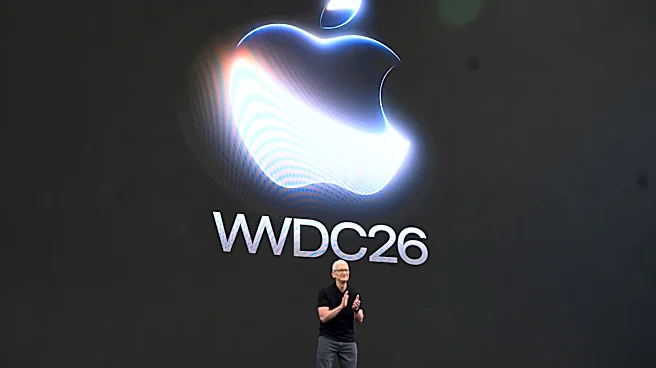
If you watched the WWDC 2024 keynote, you saw Apple Intelligence perform some impressive feats, like summarizing emails and pulling up specific photos based on a natural language request. None of that magic happens without App Intents. When you ask Siri to “send the photos from my trip to Jane,” it’s not just searching your photo library; it’s using intents. It understands the ‘verb’ (send) and the ‘noun’ (photos from my trip) and then finds the app best suited to complete the action (Messages).This is a fundamental shift. For years, Siri’s failure was its lack of deep context. It could set a timer or check the weather, but it couldn't orchestrate complex, multi-app tasks. By making App Intents the foundation, Apple is teaching its OS to think in terms of actions, not just apps. It’s a slow, methodical process of cataloging everything your phone can do, turning your collection of disconnected apps into a cohesive, intelligent system.
Building an Unbeatable Competitive Moat
Here's where the business strategy comes in. Every developer who adopts App Intents is, in effect, laying another brick in Apple’s fortress. Google can build a fantastic large language model for Android, but it can’t easily replicate the deep, structured integration with millions of third-party apps that Apple is cultivating. For Apple's AI to be truly useful, it needs developers to do the work of defining what their apps can do.This creates a powerful network effect. As more developers integrate App Intents, Apple's AI becomes more capable. As the AI becomes more capable, the iPhone becomes a more indispensable tool, making it harder for users to switch to Android. This isn't about having a slightly better camera or a faster chip; it’s about creating an operating system that understands your needs and marshals all its resources to meet them, a feat that becomes exponentially harder for competitors to match over time.
The Road to the 2026 Tipping Point
Why 2026? It’s not a magic number, but a logical projection. Building this catalog of intents takes time. Developers need to adopt the framework, and Apple needs to refine how the system uses that information. WWDC 2024 was the public starting pistol. By WWDC 2025, we’ll likely see a significant expansion in the types of intents and the intelligence built on top of them.By 2026, after two full years of developers across the ecosystem integrating these capabilities, Apple could reach a tipping point. The library of available actions will be so vast that Siri and Apple Intelligence will be able to perform incredibly complex, personalized tasks that feel like science fiction today. Imagine saying, “Plan a weekend trip to Chicago for my anniversary next month, find a cool jazz club near the hotel, and book a reservation for two.” A system built on a massive library of intents could actually execute that. That's the 'win'—an experience so seamless and powerful that it becomes the primary reason to own an Apple device.