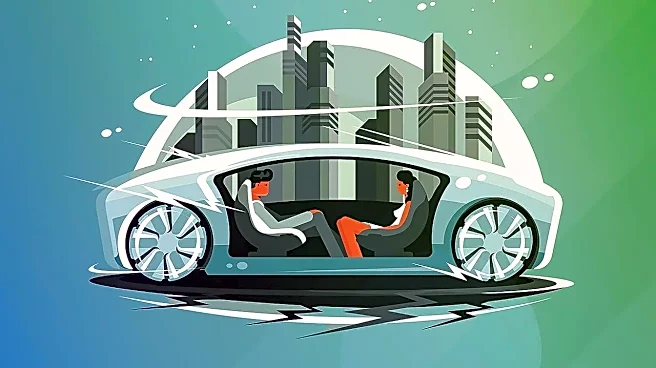

Myth: Robotaxis are just around the corner.
The belief among many Tesla enthusiasts is that true, driverless robotaxis are a short software update away from becoming a reality across the country. The argument is that since Tesla has millions of cars
on the road collecting data and its Full Self-Driving (FSD) software is rapidly improving, the company is on the verge of flipping a switch and launching a nationwide autonomous network. This vision sees a near-future where a Tesla can earn money for its owner by operating as a taxi while they sleep, generating a new, high-margin revenue stream almost overnight. This narrative has been a powerful driver of the company's valuation for years.
Reality: The tech is still a driver-assist system.
Despite the name “Full Self-Driving,” Tesla’s current system is officially classified as a Level 2 driver-assistance feature. This means it requires a fully attentive human driver ready to take over at any moment. True robotaxis require Level 4 or 5 autonomy, where the car is fully responsible for driving in specific conditions (Level 4) or all conditions (Level 5), with no human oversight needed. The technological chasm between Level 2 and Level 4 is immense, involving not just better software but near-perfect reliability in an infinite number of edge cases—from unpredictable pedestrians to confusing construction zones. While Tesla has launched limited, geofenced services and is developing a purpose-built 'Cybercab,' the core technology for a widespread, truly driverless network remains a monumental challenge.
Reality: The regulatory maze is a nightmare.
Even if the technology were perfected tomorrow, Tesla couldn't just launch a national robotaxi service. The United States has no unified federal framework for autonomous vehicles. Instead, there's a chaotic patchwork of state and local laws. As of 2026, dozens of states have enacted their own AV-related legislation, creating different rules for testing, deployment, and operation. Getting approval city by city is a slow, expensive grind, as each municipality has its own safety concerns and regulatory bodies. This complex legal landscape, not just technical capability, is a primary reason why even established players like Waymo have expanded their services very deliberately, one city at a time.
Reality: The upfront cost would crush margins, not help them.
The idea that robotaxis will instantly fix margin pressure ignores a crucial fact: building and operating a fleet would require staggering upfront investment. Tesla has already guided its capital expenditures for 2026 to exceed $25 billion, largely for AI and new products. This spending is contributing to negative free cash flow, burning through $1.1 billion in the second quarter of 2026 alone. To launch a robotaxi service at scale, Tesla would likely need to own and operate a massive fleet of vehicles itself. That means absorbing the costs of manufacturing, maintenance, insurance, cleaning, and building out charging and service depots. This is a capital-intensive, low-margin business in its early days—the polar opposite of a quick financial fix. The initial phase would dramatically increase spending and further pressure profitability long before any high-margin software revenue could be realized.