







The Empire Built on 'New Technology'
In the early 1990s, business computing was a battlefield. Microsoft had Windows, but it was seen as a consumer product running on top of the aging MS-DOS. Serious businesses ran on servers from Novell or powerful workstations using UNIX. Microsoft's answer,
released in 1993, was Windows NT, which stood for 'New Technology'. It was a complete rewrite, a 32-bit operating system built from the ground up for stability, security, and networking. Led by legendary engineer Dave Cutler, NT was designed to be robust, with a protected memory model that meant one bad application couldn't crash the entire server—a revolutionary concept for many PC users. It wasn't just an operating system; it was a declaration of war on the established enterprise market. With Windows NT Server, Microsoft provided a platform that was not only powerful but also featured the familiar Windows interface, dramatically lowering the barrier to entry for businesses wanting to build client/server networks. This was the foundation of Microsoft’s enterprise empire.
Owning the Server Closet
The success of NT wasn't just the OS itself, but the ecosystem that grew around it. Products like SQL Server for databases, Exchange for email, and later, Active Directory in Windows 2000 for managing user permissions, created a suite of tools that became the default IT infrastructure for a generation of businesses. Microsoft methodically built a fortress of software that ran the internal operations of countless companies. For years, the business model was simple: sell software licenses for servers in the closet and desktops on every desk. This strategy culminated with Windows XP in 2001, which finally unified the rock-solid NT kernel with a user-friendly interface, bringing NT's stability to consumers and cementing Microsoft's dominance. This on-premise ecosystem was Microsoft's cash cow, but it also became its strategic vulnerability as a new paradigm emerged.
A Pivot to the Cloud
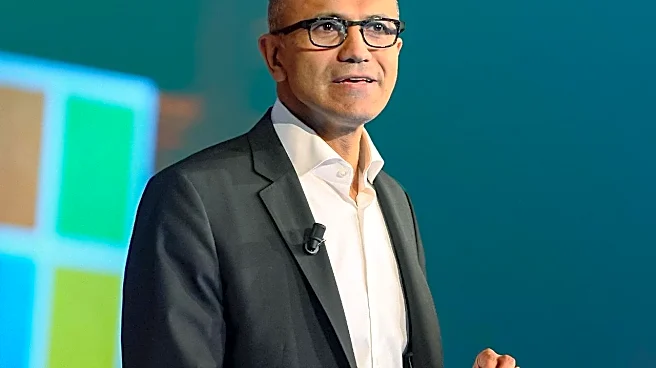
By the time Satya Nadella became CEO in 2014, Microsoft was seen by many as a legacy giant that had missed the boat on mobile and was late to the cloud. Amazon Web Services was the undisputed leader in cloud computing. Nadella initiated one of the most significant pivots in modern corporate history, shifting the entire company's focus from 'Windows-first' to 'cloud-first'. The project that began in 2008 as 'Windows Azure'—initially an extension of the NT-based server OS to the cloud—was rebranded to Microsoft Azure and became the company's central organizing principle. Instead of fighting the rise of open-source software like Linux, Nadella's Microsoft embraced it on Azure. The goal was no longer to sell licenses for servers in a closet, but to rent computing power, storage, and services from Microsoft's own massive data centers. It was a bet on becoming the essential utility for the next era of computing.
The New Stack: AI as a Service
Which brings us to today. The recent announcements at Microsoft Ignite, taking place this week from November 17-20, are the logical conclusion of that decades-long journey. The focus is squarely on Azure AI, Copilots, and autonomous 'agents' that can perform complex tasks. This isn't a separate product line; it is the new enterprise stack. Just as Windows NT provided the stable kernel for an ecosystem of server applications, Azure now provides the global infrastructure for an ecosystem of AI models and services. Nadella's strategy, detailed in his recent annual letter, is to move beyond simply providing AI tools and focus on delivering measurable business outcomes, tackling the high cost of running AI models. With Azure revenue crossing $100 billion and Microsoft 365 Copilot surpassing 30 million paid seats, the company is embedding AI into the very fabric of enterprise work, from Office documents to developer tools.