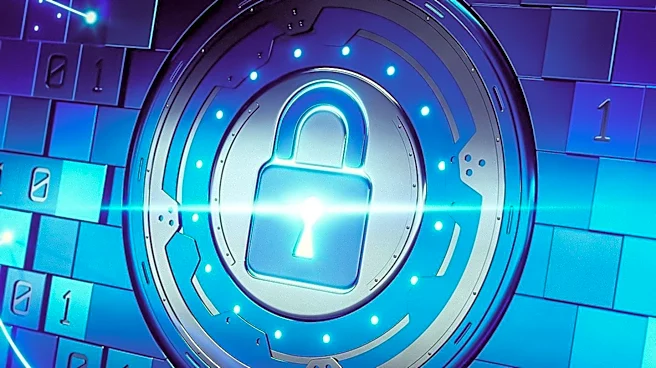






Every time you see that little padlock in your browser's address bar, a complex, lightning-fast negotiation happens behind the scenes. This 'SSL handshake' is the bedrock of online trust, but it wasn't designed just to be complicated.
The Original Problem: Trusting Strangers Online
In the early days
of the web, the internet was like a massive public square where anyone could overhear your conversation. As companies like Netscape envisioned a future of e-commerce, they hit a fundamental wall: how can you safely send sensitive information, like a credit card number, to a server you've never met? The challenge had three core parts. First, authentication: how does your browser know the website is really your bank and not an imposter? Second, confidentiality: how do you ensure no one can eavesdrop on your data as it travels across the internet? And third, integrity: how can you be sure the information you receive hasn't been secretly tampered with along the way? The designers of the Secure Sockets Layer (SSL), the protocol that would eventually become Transport Layer Security (TLS), needed a system that could solve all three issues for millions of users automatically.
The Solution: A Tale of Two Keys
The genius of the SSL handshake lies in its clever use of two different types of encryption: asymmetric and symmetric. Think of asymmetric encryption (or public-key cryptography) like a mailbox with a public slot but a private key. Anyone can drop a message in the slot (the public key), but only the owner has the unique key to open it (the private key). This is perfect for securely exchanging initial information, but it's relatively slow. Symmetric encryption, on the other hand, uses the same single key for both locking and unlocking the data. It's incredibly fast and efficient for encrypting large amounts of information, but it has a major weakness: how do you securely share that single secret key in the first place without someone intercepting it? The designers of SSL realized they could get the best of both worlds. They decided to use the slow but secure asymmetric method for the initial 'handshake' to safely agree upon a brand-new, temporary symmetric key. Once that 'session key' is established, both sides switch to the faster symmetric encryption for the rest of the conversation.
The Handshake in Plain English
The handshake itself is a rapid, four-part dialogue. First, your browser sends a 'ClientHello' message to the server, saying, 'Hi, here are the security protocols I support'. The server responds with a 'ServerHello', choosing the strongest protocol they both can use. Second, the server presents its digital ID card: the SSL certificate. This certificate is crucial because it contains the server's public key and proves its identity. Third, your browser inspects this certificate. It checks that it was issued by a trusted 'Certificate Authority' (like a digital DMV), that it hasn't expired, and that it's for the website you're actually trying to visit. If everything checks out, your browser uses the server's public key to encrypt a newly created session key and sends it back. Only the server can decrypt this message with its private key. Finally, both parties send a 'finished' message, encrypted with the new session key, to confirm that the process was successful and the channel is secure. From this point on, all communication is locked down.
The 'Real' Reason: A System of Verified Trust
Ultimately, the handshake wasn't just designed to be a clever cryptographic process; it was designed to create a scalable system of trust. The math of encryption is only half the story. The other, more critical half is the infrastructure of Certificate Authorities (CAs). A CA is a trusted third party that does the work of verifying a company or individual's identity before issuing them an SSL certificate. Your browser comes preloaded with a list of these trusted CAs. When your browser checks a site's certificate, it's not just checking a file; it's confirming that a reputable organization has vouched for that site's identity. This is the 'real reason' it all works. Without this system of third party verification, we would have no reliable way to distinguish a legitimate online store from a convincing fake. The handshake is the mechanism that enforces this trust, making the modern digital economy possible by solving any foundational problem of how to deal safely with strangers.