







Volkswagen: When Deception Becomes Policy
The most direct parallel to Boeing's crisis of trust is Volkswagen's "Dieselgate" scandal. In 2015, the world learned that the German auto giant had intentionally installed "defeat devices" in 11 million of its diesel cars. This software could detect
when a car was undergoing emissions testing and alter its performance to meet legal standards, while on the road it emitted pollutants up to 40 times the legal limit. The scandal was a story of engineering prowess being weaponized to deceive regulators and the public. It revealed a corporate culture where ambitious goals—in VW's case, to become the world's largest automaker—led to systemic fraud, resulting in billions in fines, executive resignations, and a catastrophic blow to a brand built on reliability.
Toyota: The Perils of Ignoring Red Flags
Toyota built a global empire on the concept of relentless quality improvement. Yet, in 2009 and 2010, the company was engulfed by a crisis over unintended acceleration. Reports linked the issue to multiple fatal crashes, initially blamed on floor mats trapping gas pedals and later on sticking pedal mechanisms. Toyota recalled nearly nine million vehicles globally and faced intense scrutiny for what critics called a slow and defensive initial response. The episode showed how even a company obsessed with quality can stumble badly, especially when its supply chain grows complex and it potentially downplays early warning signs. Unlike others, however, Toyota's recovery became a case study in how to publicly recommit to safety, demonstrating that rebuilding trust is possible, though incredibly costly.
Wells Fargo: A Culture Corrupted by Quotas
Not all cautionary tales involve heavy machinery. Wells Fargo's scandal shows how a toxic culture can rot a company from the inside. From 2002 to 2016, employees, driven by intense pressure to meet unrealistic sales goals, secretly opened millions of unauthorized bank and credit card accounts. This wasn't the work of a few bad apples but a widespread practice known as "gaming" the system, encouraged by a high-pressure management culture. While no lives were lost, the fraud damaged customers' credit and eroded the public's trust in a major financial institution. The parallel to Boeing lies in how internal pressure for numbers—whether it's opening new accounts or pushing planes off the assembly line faster—can override ethics and basic duties to the customer, leading to devastating consequences.
Lockheed Martin: Too Critical to Fail?
As a fellow aerospace and defense giant, Lockheed Martin shares Boeing's complex relationship with the U.S. government. Its F-35 Joint Strike Fighter program is a prime example of the challenges inherent in building next-generation technology. The program has been plagued for decades by massive cost overruns, persistent delivery delays, and performance issues, with its total lifetime cost projected to exceed $2 trillion. Government watchdog reports have repeatedly highlighted that both Lockheed Martin and its engine supplier, Pratt & Whitney, deliver crucial components late. Despite these issues, the F-35 is considered essential to national defense. This dynamic, where a contractor is so critical that it faces limited consequences for underperformance, mirrors a core part of the Boeing dilemma: the reality of being one of only two major commercial aircraft builders in the world.
Airbus: The Rival Who Learned and Waited
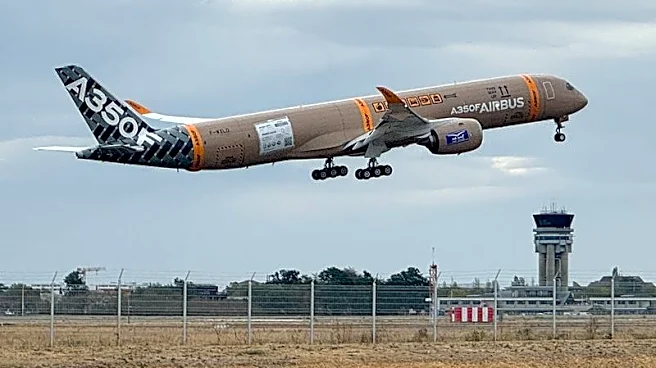
The story of Airbus provides the ultimate context for Boeing's struggles. For decades, the two were locked in a fierce duopoly. Airbus had its own share of programmatic headaches, like the costly A380 superjumbo that never met sales expectations. However, as Boeing's culture reportedly shifted from being engineering-led to finance-driven after its 1997 merger with McDonnell Douglas, Airbus maintained a steady focus on production. While Boeing has been mired in quality control failures and production halts, Airbus has capitalized, expanding its market share to over 60% in the narrow-body jet category. Airbus isn't a perfect company, but its story serves as a powerful counterpoint, illustrating what can happen when a competitor keeps its eye on the fundamentals of engineering and manufacturing while your own focus strays.