









The Age of the AI Assistant
For the past several years, the conversation around AI in programming has been dominated by one concept: code completion. Led by tools like GitHub Copilot, which is owned by Microsoft, this technology effectively acts as an incredibly smart autocomplete.
As a developer types, the AI suggests single lines or entire blocks of code, speeding up the process and reducing tedious, repetitive work. It was a breakthrough, effectively giving every programmer a 'pair programmer' to help them navigate syntax and boilerplate logic. This first wave of AI integration was a massive productivity boost. It made good developers faster and helped new developers learn the ropes. But its function remained fundamentally assistive. The human was always in the driver's seat, making every decision about structure, logic, and implementation. The AI was a powerful tool, but it was still just a tool.
Enter the Autonomous Agent
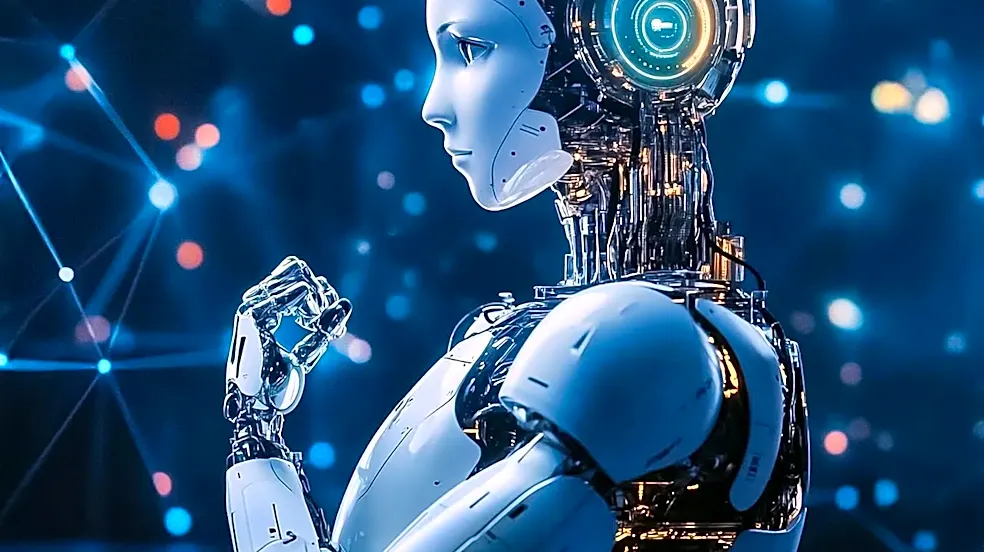
The shift toward 'agentic' development represents a fundamental change in that human-AI dynamic. An AI agent is not just an assistant that waits for commands; it's a proactive system designed to achieve a goal. In software development, this means you don't ask it to write a specific function; you give it a high-level task like 'Add a two-factor authentication feature to the user login page'. The AI agent then independently creates a plan, identifies the necessary files to modify, writes the new code, generates tests to validate its work, and even debugs its own errors if the tests fail. It operates as a virtual junior developer, capable of understanding context, planning multi-step actions, and executing them from start to finish. This is the difference between an AI that helps you lay bricks and one that can understand the blueprint and build a wall by itself.
The Push Beyond a Productivity Plateau
So why is Microsoft pushing so hard in this direction? The primary driver is the pursuit of the next major leap in productivity. While code completion has been successful, its benefits are starting to plateau. Shaving a few seconds off writing a function is valuable, but it doesn't solve the bigger, more time-consuming challenges of software development: architectural design, managing complex dependencies, and the endless cycle of testing and debugging. Microsoft recognizes that the true bottleneck is no longer typing speed but cognitive load. By automating entire workflows, agentic AI promises to tackle the complexity that slows down projects and balloons budgets. For Microsoft, owning this next layer of the development stack isn't just a product strategy; it's a vision for making software creation exponentially faster and more accessible, further cementing the dominance of its Azure cloud and developer ecosystem.
Redefining the Developer's Job
Naturally, the rise of autonomous AI agents raises an obvious question: Will this replace human developers? The emerging consensus is no, but it will fundamentally change the job description. As agents take over the low-level, task-oriented work of writing and fixing code, human developers will be pushed 'up the stack'. Their focus will shift from the 'how' to the 'what' and 'why'. The most valuable skills will no longer be mastery of a specific coding language's syntax, but the ability to translate a business need into a clear technical specification that an AI agent can execute. Developers will become architects, system designers, and project managers, overseeing a team of AI agents. Their role will be to provide the high-level vision, creativity, and critical judgment that still lies far beyond the capabilities of any AI, turning them into the true directors of software creation.