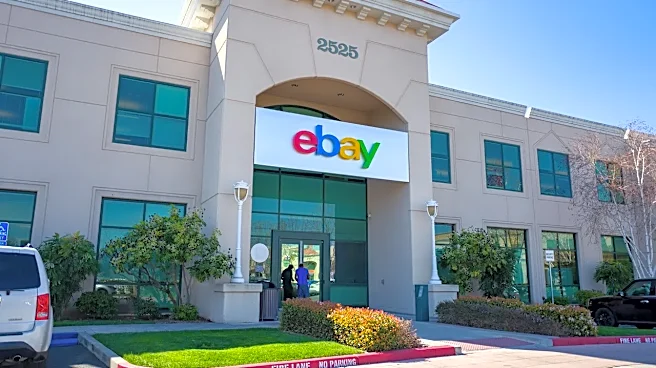









For over 70 years, the Fortune 500 has been the definitive scorecard for American corporate might. Dot-com pioneer eBay has had a long and storied history with that list, a journey that reflects the seismic shifts in tech and commerce.
The Dot-Com Darling Arrives
Founded in 1995
as AuctionWeb, eBay was a revolutionary concept born from the early web's Wild West spirit. It wasn't a retailer; it was a community, connecting individual buyers and sellers in a digital flea market. This peer-to-peer model was explosive. After going public in 1998, the company's growth was staggering. By the early 2000s, having survived the dot-com bust that wiped out so many of its contemporaries, eBay was a bona fide tech giant. Its profitability and rapidly climbing revenue soon earned it a coveted spot on the Fortune 500 list in 2003, cementing its place among America's corporate elite. This wasn't just another company; it was a cultural phenomenon that had fundamentally changed how people thought about commerce and collecting.
The PayPal Era and Peak Power
EBay's ascent on the Fortune 500 was supercharged by its landmark acquisition of PayPal in 2002 for $1.5 billion. At the time, PayPal was already the preferred payment method for a majority of eBay auctions. Bringing it in-house was a masterstroke. The synergy was undeniable: PayPal made transactions on eBay seamless and more secure, which in turn drove more users and sales on the marketplace. For over a decade, PayPal was eBay's growth engine. In 2014, the year before the two companies split, PayPal generated $8 billion in revenue, nearly matching eBay's own $8.8 billion from its marketplace business. This combined strength pushed eBay up the Fortune 500 rankings, solidifying its position as a dominant force in both e-commerce and the burgeoning world of digital payments.
The Great Uncoupling
By 2014, the corporate landscape had changed. Activist investor Carl Icahn argued that PayPal, now a fintech titan in its own right, was being held back by eBay. The board eventually agreed, and in July 2015, PayPal was spun off into a separate, publicly traded company. The strategic logic was to allow each company to focus on its core business and be more agile. The immediate impact on eBay's financials was significant. Overnight, its revenue was essentially cut in half, as it no longer included PayPal's massive income stream. This structural change, not a failure of the core business, caused a predictable and dramatic slide down the Fortune 500 list in the years that followed. While still a massive company, the newly independent eBay was a smaller entity than the combined powerhouse it had been.
Reinvention and Resilience in 2026
In the years since the split, eBay has embarked on a journey of reinvention. No longer the default everything store—a title largely ceded to Amazon—it has strategically leaned into its unique strengths. The company has focused on 'enthusiast' categories where authenticity and deep inventory matter most: collectibles like trading cards, luxury watches and handbags, refurbished electronics, and auto parts. Recent years have seen a renewed focus on 'recommerce' and consumer-to-consumer (C2C) sales, with investments in live shopping features and authenticity guarantees to build trust. As of 2026, these efforts are showing results. The company reported strong revenue of $11.1 billion for 2025 and is on a growth trajectory, with its stock price hitting recent highs. While its active user numbers have seen declines, its strategic focus has kept it a profitable and highly relevant player, maintaining its long-running presence on the Fortune 500 list.