



It is Black Friday 2026, and if you are looking for a deal on a graphics card, you might find yourself in a heated argument with your neighbor. The reason? You are likely looking for two completely different things.
The Great VRAM Divide
In the world of PC hardware, there is
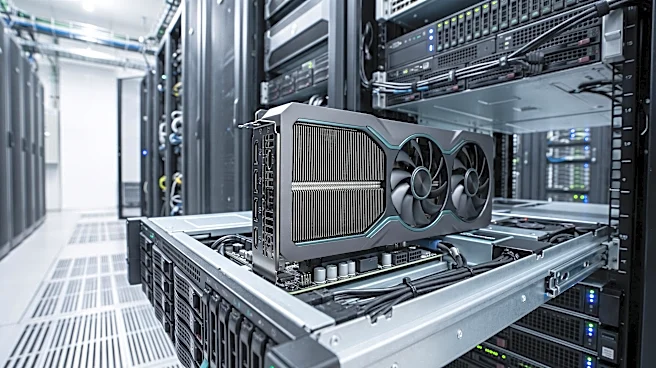
a fundamental split in what makes a graphics processing unit (GPU) 'good.' For the traditional PC gamer, the holy grail is often raw speed, high frame rates, and the ability to push beautiful textures at 1440p or 4K. They want a card that can handle the latest AAA titles like Black Myth: Wukong without stuttering. For them, the clock speed and the architecture matter most. But for the growing legion of AI developers and local LLM (Large Language Model) enthusiasts, the rules of engagement have changed. They aren't just looking for speed; they are looking for space. Specifically, they are looking for Video RAM (VRAM).
Why AI Needs the Room
If you are trying to run a local AI model on your desktop, VRAM is your hard ceiling. Think of VRAM like the workbench in a workshop. You can have the fastest, sharpest tools in the world, but if your workbench is too small, you cannot fit the project you are working on. In AI development, the size of the model you can run is directly tied to how much memory the GPU has. A card with 8GB of VRAM might be a dream for a 1080p esports player, but for an AI developer trying to run a 13B or 14B parameter model, that 8GB is a brick wall. This is why the debate gets so heated: a card that is a 'steal' for a gamer might be practically useless for a developer.
The 2026 Market Reality
As we look at the current Black Friday landscape, the tension is palpable. High-end cards like the RTX 5090 are seeing massive demand, but they are proving difficult to find from reputable sellers at reasonable prices. Meanwhile, mid-range options like the RTX 5070 Ti are hovering around the $1,459 mark, which is a tough pill to swallow for many. Even the highly sought-after RTX 3060 12GB—a legendary card for entry-level AI due to its 12GB of VRAM—is seeing prices that often sit well above its original launch MSRP. For the gamer, the price-to-performance ratio is the metric of success. For the AI enthusiast, the price-to-VRAM ratio is the only metric that matters.
Choosing Your Fighter
To navigate this season without buyer's remorse, you have to identify your tier before you click 'buy.' If you are strictly an esports player focused on titles like Valorant or Fortnite at 1080p, an 8GB card is often sufficient and much easier on the wallet. If you are stepping up to 1440p AAA gaming, you should be hunting for 16GB of VRAM to ensure longevity. However, if your goal is to build a workstation that doubles as a creative powerhouse for local AI, you cannot settle for anything less than 12GB, and ideally, you should be aiming for that 16GB sweet spot. The 'best' card is entirely subjective to the workload you intend to run.