








Surviving the Dot-Com Crash
NVIDIA’s story begins in 1993, founded with a vision to revolutionize PC graphics for the gaming market. By the time the dot-com bubble was inflating in the late '90s, the company had established itself with a singular focus: building the best graphics processing
units (GPUs). Its RIVA 128 chip was a breakout success that saved the company from the brink of bankruptcy after earlier failures. When the bubble burst in the early 2000s, wiping out countless tech darlings who had weak business models, NVIDIA’s foundation in a tangible, high-demand market—PC gaming—proved to be its saving grace. Unlike companies selling vaporware, NVIDIA sold hardware that gamers, designers, and professionals desperately wanted. This focus on a real, paying customer base, rather than speculative web traffic, allowed it to weather the storm that sank so many others.
The Great Recession and a Quiet Revolution
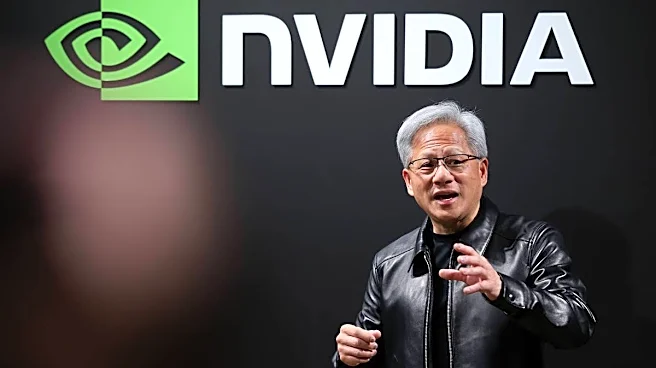
The second major test came with the 2008 global financial crisis. While the world's economy ground to a halt, NVIDIA was in the middle of its most important, and riskiest, pivot. In 2006, it had released CUDA (Compute Unified Device Architecture), a software platform that unlocked the parallel processing power of its GPUs for general-purpose computing. This was a radical idea. It turned a chip designed for making video games look good into a powerful, accessible supercomputer. The bet was enormous and the payoff was nowhere in sight. During the 2008 downturn, with the stock price plummeting, the easy move would have been to kill the expensive CUDA project. But CEO Jensen Huang and his team held their nerve. They kept investing in the CUDA ecosystem, building libraries, and courting researchers, essentially creating a new market that nobody was asking for yet. This decision, made during a period of intense financial pressure, laid the entire groundwork for NVIDIA's future dominance.
Missing Mobile, Winning the Cloud
The next tech boom was mobile. While Apple’s iPhone and the Android ecosystem created a new world order, NVIDIA’s attempt to enter the mobile chip market with its Tegra processor largely failed to displace incumbents like Qualcomm. It was a strategic setback, but one the company navigated by decisively exiting the market and repurposing the Tegra technology for automotive systems and the Nintendo Switch, turning a loss into a major success. But the real win came from a different direction. The rise of mobile apps and internet services fueled the growth of massive cloud data centers. Initially, these data centers used traditional CPUs. But researchers were discovering that NVIDIA's CUDA-enabled GPUs were extraordinarily effective at accelerating a wide range of computational tasks far more efficiently.
The Accidental (Then Intentional) AI Boom
The final, and most explosive, boom was AI. In 2012, a deep learning model called AlexNet, trained on NVIDIA GPUs, shattered records in an image recognition competition. It was a lightbulb moment for the entire industry. The parallel processing architecture that NVIDIA had built for graphics, and later generalized with CUDA, was perfectly suited for the math behind neural networks. The decade-long bet that looked like a niche scientific project was suddenly the key to the next technological revolution. NVIDIA seized the opportunity, pivoting its strategy to build a comprehensive AI platform, complete with specialized hardware, software, and libraries. It wasn't just selling chips anymore; it was selling the entire AI factory. The demand from cloud providers and AI companies has since driven the company to a multi-trillion dollar valuation, turning it into the indispensable engine of the AI era.