





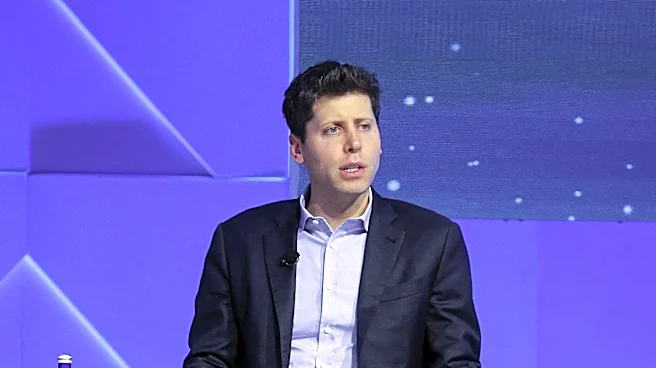
For years, AI has felt like a powerful but passive tool we command. OpenAI CEO Sam Altman, however, envisions something far more integrated: a persistent, proactive partner. This shift raises a fundamental question for all of us.
The Vision: From Tool to Teammate
Forget the simple question-and-answer
format. Sam Altman’s vision for the next phase of AI, particularly ChatGPT, is a significant leap from a reactive chatbot to a proactive 'AI agent'. This isn't just about getting a better answer to a query. Imagine an assistant that’s 'always on', with the context of your work and life, capable of handling complex, multi-step tasks on your behalf. At OpenAI's recent developer day, this concept was introduced as 'Dots', AI agents that can work within a team's shared digital space, track projects, and even answer calls and texts for you. The goal, as Altman and others in the field describe it, is to move from a tool you actively use to a teammate that works alongside you, learning your preferences and anticipating your needs.
Your Life, Upgraded?
What does this 'agent' actually do? The theoretical applications are vast. Instead of you manually searching for flights, hotels, and rental cars, you could simply tell your AI agent: 'Plan a weekend trip to Chicago for next month on a $1,000 budget'. The agent would then handle the research, comparison, and booking. In a work context, it could monitor your emails and Slack channels, summarizing key updates, drafting replies, and flagging urgent tasks. During a virtual meeting, it could listen in, prepare meeting minutes, and suggest relevant data points in real time. Altman’s vision describes a future where the clunky interface of a computer 'melts away', allowing you to delegate tasks with simple requests, freeing you up to focus on higher-level strategic thinking. The promise is a radical boost in personal productivity and efficiency by automating the tedious parts of our digital lives.
Beyond the Hype: Defining Your Own AI Terms
This vision of a hyper-competent digital assistant is both exciting and, for many, unsettling. It pushes the central question of the headline to the forefront. The power of these tools is undeniable, but it forces a personal reckoning with what we truly want from them. Recent statements from Altman have emphasized that humans must remain in control and that AI should be a tool for empowerment, not a force that diminishes human agency. He has argued that the goal isn't just to cure diseases or create wealth, but to give people more freedom, creativity, and control over their lives. This puts the responsibility back on the user. Do you want an AI that just helps you write emails, or one that manages your entire schedule? Are you comfortable with a program 'looking at all your stuff' to be more helpful? The answers will be different for everyone, turning the debate over AI into a deeply personal one about convenience versus privacy and autonomy.
The Real Question Isn't 'What Can It Do?'
As AI's capabilities expand at a dizzying pace—Altman himself noted that AI went from being less smart than top scientists to outperforming them in many areas in 2026 alone—the temptation is to focus on its raw power. But the more salient question is not what AI can do,
but what you need it to do. While one person might embrace an AI agent to manage their finances and investments,
another might only want it to proofread their documents. Altman’s philosophy,
at least publicly,
is that this is the correct framing;
the technology should augment human judgment,
not replace it.
The challenge for society,
he suggests,
is to build systems that empower individuals without making them dependent.
This requires a shift in our thinking—from being passive consumers of technology to becoming active architects of our own digital experience.
It means deciding where to draw the line between helpful assistance and unwelcome intrusion.