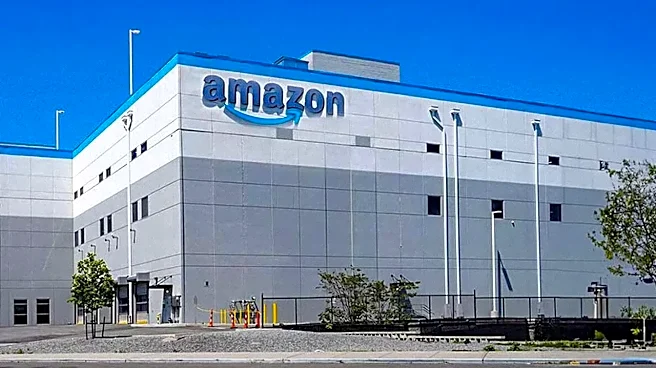









The numbers are staggering: cloud providers are reporting record-breaking revenue growth, and everyone credits the artificial intelligence gold rush. The assumption is simple: more AI customers means more profit. But that's not the whole story.
The Revenue Gold Rush
On the
surface, the AI boom looks like a license to print money for Amazon Web Services (AWS), Microsoft Azure, and Google Cloud. Recent quarterly earnings have shown explosive, double-digit growth, with AI often cited as the primary driver. Microsoft, for example, noted that AI was a significant contributor to its cloud growth, while Google Cloud's revenue has surged, with some reports showing it more than doubled year-over-year in one quarter. These top-line numbers paint a picture of unstoppable momentum. Companies of all sizes are scrambling for the computing power needed to train and run AI models, and the cloud giants are the primary landlords. This has led to a simple, powerful, and widespread belief: the AI wave is lifting all cloud boats to new heights of profitability.
The Billion-Dollar Hardware Bill
Here's the catch: the infrastructure that powers artificial intelligence is astronomically expensive. This isn't about buying a few more standard servers. AI workloads require massive fleets of specialized processors, primarily GPUs, which can be ten to thirty times more expensive than traditional hardware. To meet the 'vertical wall of demand,' cloud providers are pouring unprecedented sums into capital expenditures, or CapEx. J.P. Morgan projected that global AI CapEx could hit $900 billion in 2026 alone. This spending spree has a direct impact on free cash flow. In one instance, Amazon's aggressive investment in AI infrastructure caused its free cash flow to plummet dramatically as it reinvested nearly every dollar it generated to stay ahead. These aren't one-time costs; the hardware has a limited shelf life and requires constant upgrades, creating a costly cycle of investment just to keep up.
When Margins Get Complicated
Not all revenue is created equal. The profit margin on AI services is structurally different—and often lower—than for traditional cloud offerings like data storage. Classic software-as-a-service (SaaS) boasts gross margins in the 70-90% range because the cost of serving one more customer is near zero. AI is different. Every time a user runs a query, it consumes real, expensive computing power. As a result, analysts have found that AI product gross margins typically hover in the 50-60% range. While this is an improvement from previous years, it's still a significant step down from legacy cloud services. The cloud providers must not only pay for the expensive hardware but also the immense electricity and cooling required to run it, all of which eats into the profitability of each dollar of AI revenue.
A Long Game for Profit
The massive AI investments being made by Amazon, Microsoft, and Google are a strategic, long term bet, not a short term profit grab. They are racing to build capacity and secure market share in what they believe will be the next era of computing. The goal is to lock in customers for years to come, even if it means sacrificing immediate profitability. Executives have openly stated that customer demand is outstripping their available supply, justifying the historic spending levels. They are essentially in an arms race where being short on compute is the one mistake they cannot afford to make. This suggests a future where, once the initial infrastructure build out slows, the immense revenue will translate into more robust profits. For now, however, the focus is squarely on growth and expansion.