





The Engine Under the Hood: What is CUDA?
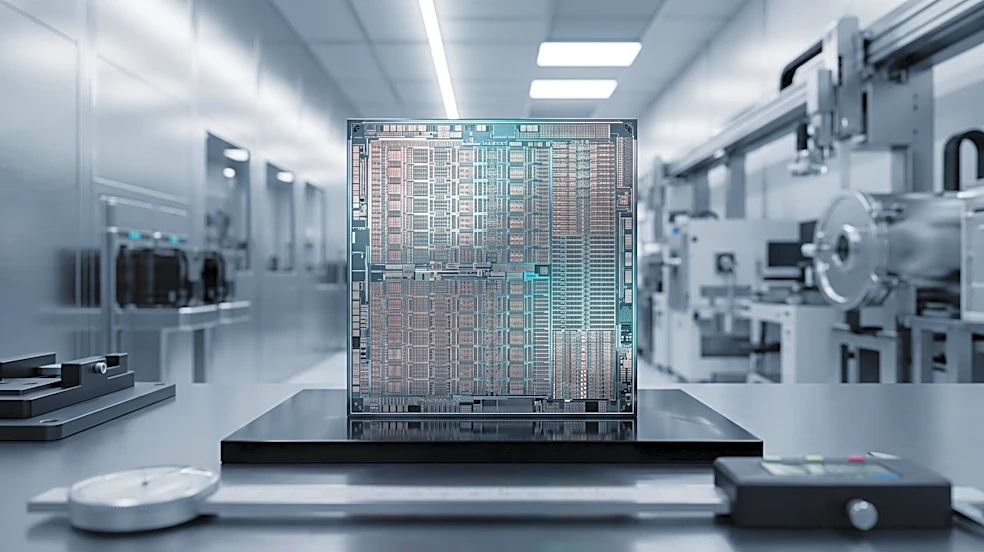
When people talk about NVIDIA's dominance in AI, they often point to its powerful graphics processing units (GPUs). While the hardware is best-in-class, the true competitive advantage is a nearly two-decade-old software platform called CUDA (Compute Unified
Device Architecture). CUDA is the bridge that allows developers to unlock the massive parallel processing power of NVIDIA's GPUs for tasks beyond graphics, like the complex mathematical calculations needed for training AI models. Before CUDA, programming a GPU for general-purpose computing was a highly specialized, almost mystical art. By releasing CUDA in 2007, NVIDIA gave developers a way to use familiar programming languages like C++ to command its hardware, effectively turning its gaming chips into engines for scientific discovery and, eventually, the AI revolution.
Building a Moat with Software
This software layer created one of the deepest strategic moats in modern technology. For over a decade, NVIDIA invested heavily in CUDA, building a rich ecosystem of libraries (like cuDNN for deep learning), developer tools, and university partnerships while competitors focused primarily on hardware specs. This created powerful network effects. AI frameworks like TensorFlow and PyTorch were optimized for CUDA first. An entire generation of AI researchers and developers learned to build on NVIDIA's platform, creating immense switching costs. Migrating a complex AI workload off of CUDA is not just a matter of swapping out a chip; it involves retraining teams, rewriting code, and validating performance, a risky and expensive proposition for any company. This 'lock-in' makes it incredibly difficult for rivals like AMD or Intel to compete, even if they produce comparable hardware.
Demos Are the Fruit, Not the Tree
This brings us back to the flashy demos at events like GITEX Global. Whether it's a humanoid robot, a generative AI creating art, or a smart city simulation, the vast majority of these applications are trained and run on NVIDIA's platform. These demonstrations are the fruit of the CUDA ecosystem, not the seed. They showcase what’s possible when millions of developers have a stable, powerful, and well-documented platform to build upon. While a competitor might create a demo running on its own silicon, that’s a single data point. NVIDIA's ecosystem, meanwhile, enables thousands of such innovations simultaneously across the globe. The company's strategy ensures it wins regardless of which specific AI model or application becomes dominant.
The Future Isn't a Gadget, It's a Platform
While challengers are emerging and the notion of a permanent 'lock-in' is being tested, the reality is that NVIDIA's position is fortified by years of strategic patience. The company understood early on that the future of computing would not be defined by a single piece of hardware but by the software platform that enables innovation at scale. The race to build artificial general intelligence will require trillions of dollars in computing infrastructure, and NVIDIA has positioned itself as the foundational layer for much of that build-out. The AI demos are exciting glimpses of the future, but they are a symptom of a much larger trend: the world runs on the software and systems that developers know and trust.