





The Core Conflict: Control vs. Agility
At the heart of the debate is a fundamental philosophical divide. On one side, you have engineers who prioritize direct, physical control over servers and infrastructure. On the other, you have those who champion the speed and scalability that commercial
cloud services provide. For a federal agency, this isn't an abstract argument. It’s a collision between the traditional 'castle-and-moat' security model, where everything is kept on-premises and locked down, and the modern, decentralized approach required by cloud computing. One side asks, 'Can we trust a third party with national security data?', while the other counters, 'Can we afford not to use the advanced, scalable tools that cloud providers offer?'.
The 'On-Prem' Traditionalist's Viewpoint
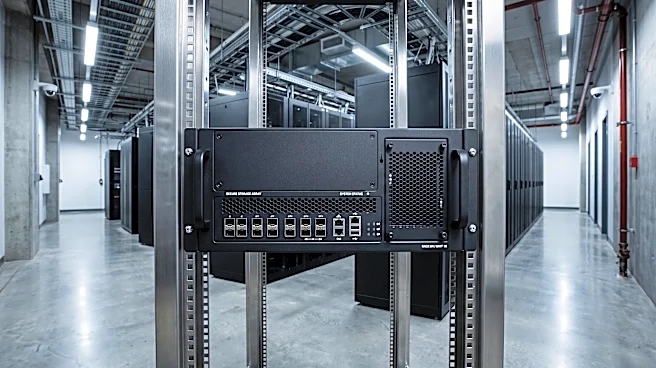
Engineers from this school of thought grew up building and defending physical data centers. To them, security is about owning the hardware, controlling the network from end to end, and knowing that sensitive data resides within a government-controlled facility. They argue that public clouds, by their nature, introduce unacceptable risks through multi-tenancy—where multiple customers share the same physical infrastructure—and the loss of direct oversight. Their biggest fear is that migrating to a commercial cloud means handing over the keys to the kingdom. They believe private clouds, hosted on-premises, offer the benefits of cloud technology without sacrificing the ultimate control necessary for handling sensitive government information.
The 'Cloud-Native' Advocate's Stance
Conversely, cloud-native engineers argue that major providers like Amazon Web Services, Microsoft Azure, and Google Cloud have security resources that far exceed what any single government agency can muster. These providers employ thousands of top-tier security experts and offer sophisticated, automated tools for threat detection and compliance that are built directly into the platform. Proponents of this view argue that clinging to on-premises hardware is the riskier move, as it often relies on legacy systems and smaller, overburdened security teams. They believe true security comes from leveraging the massive scale and continuous innovation of commercial cloud platforms, enabling the agency to be more agile and resilient.
The Hybrid Cloud 'Compromise' Creates New Fights
Most agencies land on a hybrid cloud model, attempting to get the best of both worlds by keeping the most sensitive data on_premises while using public clouds for less critical workloads. But this compromise often creates its own battleground. Security engineers now have to manage a far more complex environment, securing data as it moves between private and public systems. This raises new arguments over 'tool sprawl,' inconsistent security policies, and a lack of clear visibility across different platforms. The hybrid solution, while pragmatic, often satisfies neither the traditionalists nor the cloud_natives completely, leading to ongoing friction over how to manage the new, fragmented attack surface.
The Real Deciding Factor : FedRAMP
Ultimately , the 'real reason' for the disagreement is often less about technological purity and more about navigating the labyrinth of federal compliance . The Federal Risk and Authorization Management Program ( FedRAMP ) sets the security baseline for all cloud services used by the government . This rigid , expensive , and time - consuming certification process dictates nearly every decision . The debate among engineers is often not about which cloud is 'best,' but which approach can most easily achieve and maintain a FedRAMP 'Authority to Operate' ( ATO ) . An engineer might prefer a cutting - edge tool , but if it 's not FedRAMP authorized , it 's a non - starter . This regulatory burden forces compromises , limits flexibility , and shapes the entire security discussion , turning a technical debate into a bureaucratic marathon .