



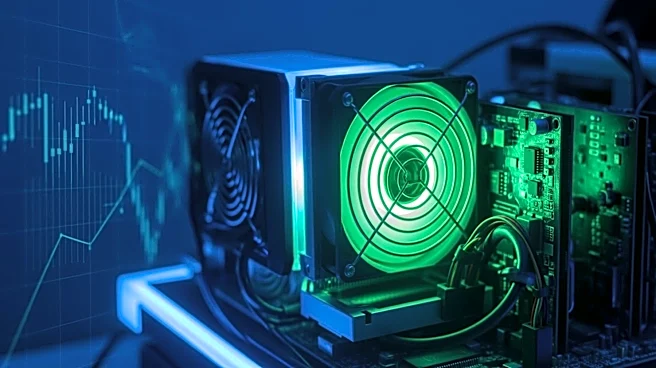

The Original Dream: Garage Mining for a New Economy
In the early days of crypto, mining—the process of validating transactions and securing the network in exchange for rewards—was a relatively democratic affair. Anyone with a decent gaming computer could use their graphics processing unit (GPU) to participate. This was the foundation of Proof-of-Work, the engine behind Bitcoin and early Ethereum. The vision was a global network secured by millions of independent users, from tech enthusiasts in their basements to students in their dorm rooms. This ethos of decentralization carried directly into DeFi, which aimed to build an entire financial ecosystem—lending, borrowing, trading—on these open, permissionless networks. The idea was that no single entity could control the system, because the system's
infrastructure was run by a distributed, global community of these small-scale miners.
Enter the Specialist: The ASIC
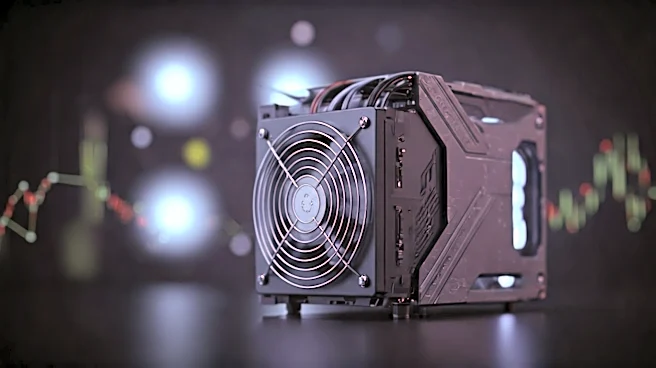
Then came the Application-Specific Integrated Circuit, or ASIC. Think of a GPU as a versatile Swiss Army knife, capable of doing many things well, from gaming to video editing to mining. An ASIC, on the other hand, is like a specialized tool designed to do only one thing: open a specific type of lock. In the crypto world, that 'lock' is a specific mining algorithm. ASICs are engineered from the silicon up to solve that one puzzle with brutal, unparalleled efficiency. An ASIC miner designed for Bitcoin can't mine other coins or play video games; it can only mine Bitcoin, but it can do so hundreds or even thousands of times faster and more power-efficiently than the best GPU. This created an arms race. Once ASICs were introduced for a specific cryptocurrency, GPU miners were almost instantly rendered obsolete and unprofitable. The hobbyist in their garage stood no chance.
From Decentralized to Industrialized
The rise of the ASIC had a profound centralizing effect, striking at the very heart of DeFi's foundational principles. First, ASICs are expensive and difficult to produce, consolidating manufacturing into the hands of just a few companies, like Bitmain. Second, their high cost and energy consumption created a massive barrier to entry. Mining was no longer a hobby; it became an industrial-scale business requiring millions in capital for warehouses, cooling systems, and cheap electricity. Power began to concentrate in massive 'mining farms' and 'mining pools,' where thousands of machines work in unison. Suddenly, a network supposedly secured by millions of independent actors was largely dependent on a handful of large, for-profit corporations. This created new risks. What if a few major pools colluded? What if a government cracked down on the few manufacturers? The 'decentralized' part of DeFi started to look a lot more fragile.
DeFi's Pivot and the New Arms Race
The DeFi world didn't take this lying down. The threat of ASIC-driven centralization forced a major reckoning. Some projects tried to remain 'ASIC-resistant' by constantly changing their mining algorithms, attempting to stay one step ahead of the hardware manufacturers in a cat-and-mouse game that was rarely successful long-term. But the most significant response came from Ethereum, the primary platform for DeFi applications. A major motivation for Ethereum's historic shift from Proof-of-Work (mining) to Proof-of-Stake (staking) in 2022 was to eliminate its dependency on miners altogether. By switching to a system where network security is handled by users who 'stake' their own coins as collateral, Ethereum effectively sidestepped the entire problem of mining centralization. This move reshaped the landscape, proving that to preserve decentralization's spirit, DeFi had to evolve its underlying technology away from the hardware arms race that ASICs had created.