






The Trillion-Dollar Promise
First, let's talk about why you're hearing the term 'quantum' in the first place. At its core, quantum computing isn't just a faster version of the computers we have today; it's a completely different way of processing information. Your laptop thinks
in 'bits'—either a 0 or a 1. Quantum computers use 'qubits,' which can exist in a state of both 0 and 1 simultaneously. This property, called superposition, allows them to explore a vast number of possibilities at once. The potential applications are staggering. Think about discovering new drugs by modeling molecules in ways that are impossible today, creating new materials for manufacturing, or optimizing global financial markets to a level of efficiency we can't currently comprehend. This is why firms like McKinsey project that quantum technologies could unlock trillions of dollars in economic value. It's not just an upgrade; it's a paradigm shift.
The Sobering Scientific Hurdles
Now for the hard part. That 'superposition' that makes qubits so powerful is also what makes them incredibly fragile. Qubits are prone to 'decoherence,' where they lose their quantum state due to the slightest environmental disturbance—a stray vibration, a temperature fluctuation. This creates a huge number of errors. A recent breakthrough by Google made progress on this front, but it highlights the central challenge: a truly useful quantum computer might need to devote most of its power simply to correcting its own mistakes. We're in what experts call the 'Noisy Intermediate-Scale Quantum' (NISQ) era. The machines are real, but they are small, error-prone, and not yet powerful enough to solve commercially relevant problems better than a classical supercomputer. Scaling up from today's small processors to the millions of stable qubits needed for fault-tolerant computing is a monumental scientific and engineering challenge that is still years, if not decades, away from being solved.
An Investment Thesis Built on Patience
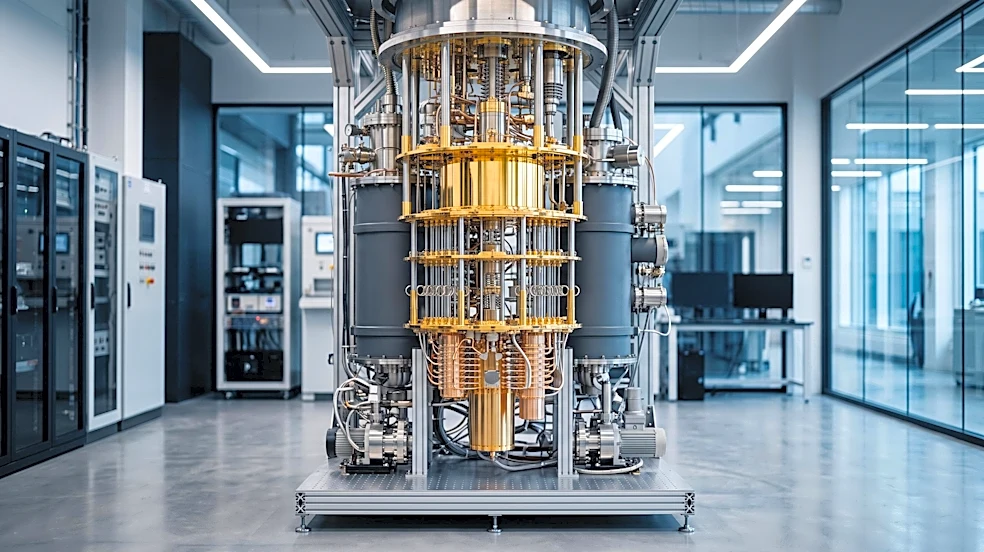
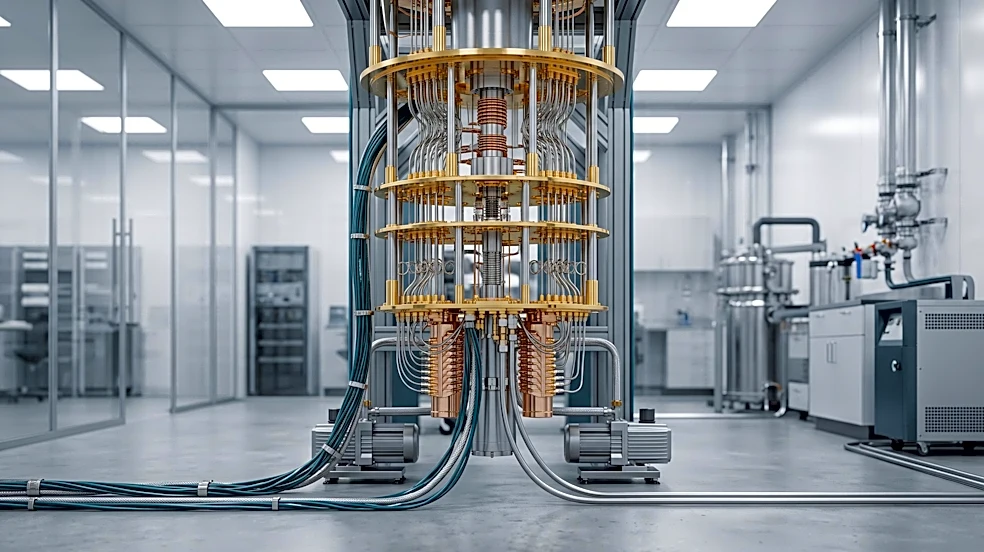
For an investor, this creates a difficult situation. Quantum computing is not a typical venture capital bet with a five-to-seven-year exit strategy. It's deep science, requiring massive, long-term 'patient capital.' The companies in this space often have impressive research but little to no revenue, making traditional valuation impossible. The market is seeing a split. Some investors are backing 'full-stack' companies like Quantinuum or IonQ, which are trying to build the entire computer. Others are placing bets on a pick-and-shovel strategy, investing in companies that supply critical components like cryogenic cooling systems, specialized software, or, crucially, post-quantum cybersecurity solutions designed to protect against the threat quantum poses to current encryption. This adjacent market is one of the few areas generating real commercial demand today.
How to Vet a Quantum Pitch
So, as you walk the halls of GITEX and hear the pitches, how do you separate the plausible from the puffery? First, ignore the hype around raw qubit counts. Instead, ask about qubit quality, coherence times, and error rates—the real metrics of progress. Second, ask about practical applications. Are they solving a problem that a classical computer can't, and have they benchmarked it to prove it? Many so-called 'quantum' use cases are better served by today's AI or high-performance computing. Finally, look for signs of commercial traction. Are they working with major enterprise or government partners on real-world problems? Companies like Airbus and JPMorgan are already experimenting, and their involvement is a key indicator of market maturity. A company that can show a clear path from a scientific milestone to a commercial product is a much stronger bet than one that only talks about theoretical possibilities.