



More Than Just a Watch
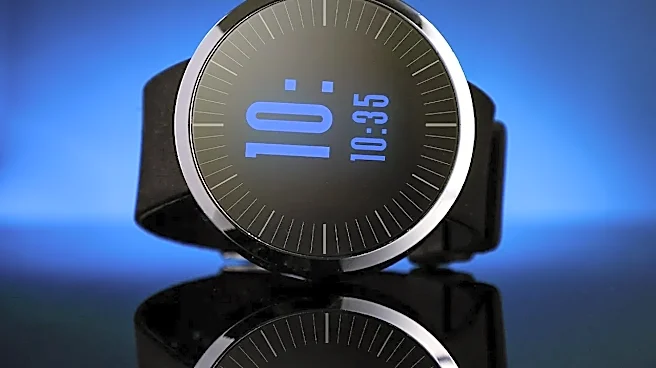
Before the Apple Watch dominated wrists and Google's Wear OS tried to keep pace, there was Pebble. Launched in 2012, it wasn't the first smartwatch, but it was the first one that felt right. It didn't try to shrink a smartphone onto your wrist. Instead,
its genius was in its simplicity. It had a power-sipping e-paper display you could read in direct sunlight, a battery that lasted for a week, and physical buttons that just worked. It was a companion, not a burden. At its core, Pebble was a statement. It connected to both iPhones and Androids, a rebellious idea in an industry already building walled gardens. It showed notifications, controlled your music, and, most importantly, was open for developers to build whatever they could imagine. It was the anti-Apple Watch before the Apple Watch even existed: functional, open, and a little bit nerdy.
The Kickstarter Tsunami
Founder Eric Migicovsky couldn't get traditional venture capitalists interested. A watch that just showed notifications? Who would want that? So, he took his idea directly to the people on Kickstarter. The goal was a modest $100,000. They hit that in two hours. Within six days, it was the most-funded project in the platform's history, eventually raising over $10 million from nearly 70,000 backers. They would repeat this success with later models, breaking their own records. This wasn't just about money; it was a seismic event. Pebble proved that you could bypass the gatekeepers and build a hardware movement from the ground up. It demonstrated massive, untapped consumer demand for wearables. The Kickstarter campaigns were more than a funding mechanism—they were a giant, public market-validation study that every major tech company watched closely.
A Glimpse of a Different Future
The headlines focused on the gadget, but the real magic was the ecosystem. Pebble was fundamentally about community. With an open software development kit (SDK), thousands of independent developers created watch faces and apps, from turn-by-turn directions to storing loyalty cards. This was a vision of technology that was playful, customizable, and belonged to its users, not just a corporation. It offered a glimpse of a future where a small, independent company could create a thriving, open platform. For a few years, it seemed like this alternative path might work. Pebble proved that a focus on core utility—long battery life and at-a-glance information—was what many users actually craved, in stark contrast to the feature-packed, power-hungry devices that would follow.
The Inevitable End and Lasting Echoes
The end came in 2016. After struggling to compete with the marketing might and deep pockets of Apple, which entered the market in 2015, Pebble was out of cash. The company that had kickstarted the smartwatch revolution was sold for parts. Fitbit acquired Pebble's intellectual property and key software engineers for around $23 million—a fraction of the value it once held—and promptly shut down the hardware line. Existing watches would stop receiving support, and the community that built the company was left with beloved but orphaned devices. On paper, it was a failure. But that misses the point. Pebble didn't lose because it made a bad product; it lost to a competitor with an almost insurmountable advantage. In its wake, it left behind an undeniable legacy. It validated the entire smartwatch category, providing Apple and Google with a free blueprint of what to do and what not to do. The DNA of Pebble's software lived on in future Fitbit devices, and its story became a crucial, cautionary tale for the entire hardware startup world.