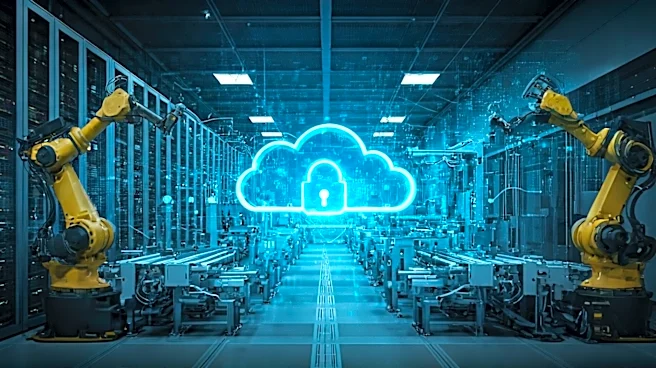










Beyond the Physical Factory Floor
When we think of a manufacturing plant, we often picture the physical assembly line. But the most valuable assets are increasingly digital. We're talking about proprietary product designs and chemical formulas (the intellectual property), real-time operational
data from IoT sensors on machinery (the operational technology), and sensitive supply chain logistics that detail suppliers, pricing, and shipping routes. In the past, this information was relatively secure, locked away on isolated servers inside the plant's four walls—an approach often called 'air-gapped' security. The only way to steal it was to physically access the network. This created a strong, simple perimeter. If you kept the bad guys out of the building, you largely kept them out of the data.
The Cloud Dissolves the Perimeter
The shift to cloud environments shatters that old security model. Cloud computing offers manufacturers incredible advantages: remote monitoring, predictive maintenance, and seamless collaboration with partners across the globe. But it also means that sensitive data is no longer confined to a single, easily guarded location. It now exists across a distributed network of third-party servers, accessed by employees, contractors, and partners from anywhere in the world. Every new cloud application, from a shared design portal (SaaS) to the raw computing power running simulations (IaaS), becomes a new potential exit point for your data. The simple, high walls of the factory fortress have been replaced by thousands of digital doors and windows that must be individually monitored and secured.
New Risks, Higher Stakes
This is why Data Loss Prevention (DLP) becomes profoundly more critical in the cloud. The risks are no longer just about external hackers. A simple misconfiguration in a cloud storage bucket by a well-meaning engineer can expose entire schematics databases to the public internet. An employee accessing a supplier portal from a personal, unsecured device could inadvertently create a pathway for malware to siphon off production schedules. The threat is not just that data will be stolen, but that it will be accidentally leaked, corrupted, or held for ransom. In a cloud environment, the potential for human error to cause a catastrophic data loss event increases exponentially because the system is vastly more complex and interconnected.
The True Cost of a Breach
For a manufacturing plant, the consequences of a cloud data breach are far more severe than just financial penalties or reputational damage. The loss of intellectual property to a competitor can erase decades of R&D investment and destroy a company's competitive edge. A leak of operational technology data could allow a malicious actor to disrupt or even sabotage the production line, leading to costly downtime and physical safety hazards. If supply chain data is compromised, it could cripple logistics, revealing sensitive pricing to rivals or allowing them to poach key suppliers. In this context, data loss isn't just an IT problem; it's a fundamental threat to business continuity, market position, and even the physical safety of the plant itself.