




The Original Billion-Dollar Heat Problem
In the pioneering days of computing, from the 1960s onward, mainframes and supercomputers were wrestling with a fundamental law of physics: computation generates heat. Lots of it. These room-sized machines, packed with processors, were the engine of scientific
discovery, but they produced so much thermal energy that simple fans and air conditioning were quickly overwhelmed. Overheating wasn't just a nuisance; it was a critical threat that could cause system failure, data corruption, and catastrophic hardware damage. For institutions running calculations that could cost millions and take weeks, keeping the hardware from melting down wasn't just an engineering challenge—it was an existential one. Air, it turned out, just wasn't efficient enough to carry all that heat away from the densely packed components. A new approach was needed.
The Liquid Revolution in the Lab
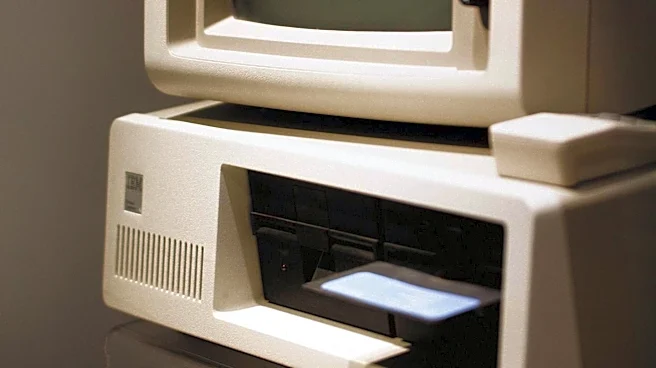
The solution came from borrowing a principle from other heavy industries: using liquid to move heat. Starting as early as the 1960s with IBM and gaining prominence with supercomputers like the Cray-2 in the 1980s, engineers began using liquid cooling. Instead of blowing air across hot components, they circulated a liquid coolant through pipes and plates attached directly to the processors. Because liquids can absorb and transfer heat far more efficiently than air, this method was revolutionary. It allowed for the creation of even more powerful and densely packed supercomputers. These early systems were complex and expensive, often using specialized, non-conductive fluids and requiring intricate plumbing, but they established a critical precedent: for the highest performance, liquid beats air.
From the Data Center to Your Desktop
For decades, liquid cooling remained a niche, high-cost solution confined to data centers and research labs. That all changed with the rise of the PC gaming and overclocking communities in the late 1990s and 2000s. Much like scientists pushing supercomputers to their limits, enthusiasts wanted to squeeze every last drop of performance from their desktop CPUs and graphics cards. This created the first real consumer demand for cooling that went beyond a simple heatsink and fan. Companies began developing smaller, self-contained, and more affordable liquid cooling loops—known as "All-in-One" or AIO coolers. These units packaged the pump, radiator, and tubing into an easy-to-install kit, bringing the core principle of mainframe cooling to the mainstream market and making high-performance, low-temperature computing accessible to everyone.
Vapor Chambers: The Silent, Flat Super-Cooler
Another technology quietly trickled down from the high-performance computing world: the vapor chamber. A vapor chamber is essentially a flattened, super-efficient heat pipe. Inside a thin, sealed copper enclosure, a tiny amount of liquid (often just water) turns to vapor when it touches a hot spot, like a processor. This vapor instantly spreads throughout the chamber, carrying heat with it, before condensing back into liquid on a cooler surface and flowing back to the start. This continuous cycle makes vapor chambers incredibly effective at spreading heat evenly and preventing dangerous hot spots. Initially developed for servers and high-end enterprise hardware, the technology was miniaturized and made cost-effective, eventually finding its way into high-performance gaming laptops, and now, even ultra-thin smartphones where traditional cooling has no space to operate.