






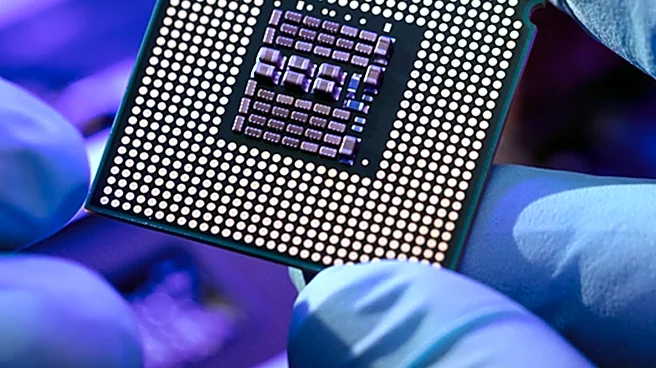
The Processor's Crystal Ball
At its heart, speculative execution is an optimization technique designed to prevent your computer's powerful processor from sitting idle. Think of the processor as a hyper-efficient librarian and you as the person requesting books. Instead of waiting
for you to finish one book and ask for the next, the librarian notices a pattern in your requests. Based on your history, they guess which book you’ll want next and fetch it from the stacks before you even ask. If they guess right, the book is waiting for you instantly. If they're wrong, they quietly put the book back, and no one is the wiser. That’s what your CPU does millions of times per second: it predicts the path a program will take and executes instructions before it knows if they're actually needed. The goal is to keep the pipeline of work full and eliminate the microscopic delays that occur when waiting for data or decisions.
An Unquenchable Thirst for Speed
The real reason this feature was designed is simple: the market demanded it. In the relentless race for performance that defined the tech industry for decades, CPU manufacturers like Intel, AMD, and ARM needed every possible advantage. Processors became so fast that the main bottleneck was often waiting for data to arrive from slower memory. Speculative execution was a brilliant solution to this 'traffic jam'. By guessing the outcome of upcoming decisions (like 'if-then' statements in code) and running ahead, CPUs could do useful work instead of stalling. The performance gains were dramatic, making everything from web browsing to complex calculations feel snappier. This design choice wasn't born from a single idea but from the cumulative pressure to make each new generation of chips significantly faster than the last. In this high-stakes environment, performance was king.
The Ghost in the Machine
For over two decades, speculative execution was an unsung hero of performance. Then, in 2018, the ghost in the machine revealed itself. Researchers discovered a set of catastrophic security vulnerabilities, famously named Meltdown and Spectre. They found a way to observe the 'librarian's' actions. Even though the wrongly fetched 'book' was always put back, they could see which one it was by noticing the subtle traces it left behind—like a slightly disturbed shelf. In CPU terms, while the results of a wrong guess are discarded, the process can leave faint footprints in the chip's cache memory. An attacker could trick the processor into speculatively accessing sensitive data—like passwords or encryption keys—and then detect those footprints to steal the information. It turned a performance-boosting trick into a massive security flaw affecting nearly every modern processor on the planet.
A Devil's Bargain We Still Live With
The discovery of Meltdown and Spectre forced a painful reckoning across the industry. The very technique designed for maximum efficiency had created a fundamental security hole. Initial patches and mitigations often came with a performance penalty, effectively rolling back some of the speed gains that speculative execution had provided. Chip designers were suddenly faced with a devil's bargain: do you prioritize raw speed or absolute security? You can't simply turn off speculative execution without a massive performance hit that consumers and businesses would never accept. As a result, modern CPU design has become a much more complex balancing act. Chipmakers now build more sophisticated hardware mitigations and security boundaries directly into the silicon. But the underlying principle remains, a constant reminder that in the world of computing, there's often no such thing as a free lunch.