







Sam Altman: The AGI Diplomat
The most direct parallel to Hassabis is Sam Altman, CEO of OpenAI. Both are the public faces of the two most important AI labs on the planet, and both are on a self-declared mission to build Artificial General Intelligence (AGI). What makes Altman a crucial case study is his navigation of the inherent conflict in this mission: balancing a non-profit-inspired goal of benefiting humanity with the colossal capital and competitive pressures of a for-profit entity. His journey with OpenAI—from its idealistic founding to its complex partnership with Microsoft and his own dramatic ousting and return—is a masterclass in the political, structural, and financial maneuvering required to keep a moonshot project on track. While Hassabis has had the relative
stability of Google's backing, Altman's path shows what it takes to build a DeepMind-like entity in a more volatile, independent environment.
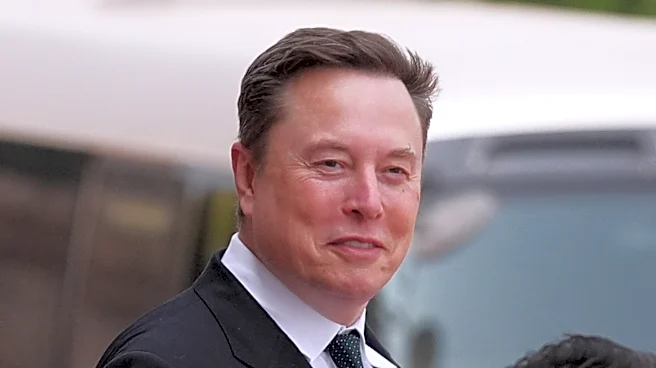
Elon Musk: The First-Principles Industrialist
If Hassabis wants to solve intelligence to solve everything else, Elon Musk wants to solve engineering to save humanity. Though his public persona is more chaotic, Musk’s core method at SpaceX and early Tesla mirrors Hassabis’s scientific rigor. His famous “first principles” approach—boiling a problem down to its fundamental, undeniable truths and reasoning up from there—is a physicist’s version of a scientist’s methodology. He didn’t just try to build a cheaper rocket; he questioned the very cost of the raw materials versus the finished product and rebuilt the industry from that premise. For those who admire Hassabis’s commitment to fundamental truths, Musk’s career demonstrates how that same intellectual purity can be applied not just to code and neural networks, but to atoms, rockets, and global supply chains.
Jensen Huang: The Long-Game Visionary
While others pursued moonshots, Jensen Huang spent three decades building the launchpad. The founder of NVIDIA is perhaps the ultimate example of a long-term, foundational bet paying off. For years, the company’s GPUs were primarily associated with video games. But Huang had a bigger vision, relentlessly investing in the software (CUDA) and hardware architecture to turn these graphics cards into general-purpose parallel processors. He foresaw a future where this specific type of computing would be essential, long before the current AI boom made it obvious. His journey teaches a different lesson from the Hassabis playbook: sometimes, the most impactful move isn’t to build the AI, but to patiently and persistently build the one tool that everyone building AI will eventually need. It's a story of incredible foresight and conviction.
Patrick and John Collison: The Systems Builders
The Collison brothers, founders of Stripe, may seem like an odd choice. They’re in fintech, not AGI or space travel. But their *approach* is pure Hassabis. They identified a fundamental, unsexy problem—making it easy to accept payments online—and treated it with the intellectual rigor of a scientific challenge. Their mission to “increase the GDP of the internet” is a grand, systems-level goal. They build Stripe less like a single product and more like a piece of core infrastructure, obsessing over documentation, API design, and developer experience. This reflects the same deep respect for foundational work seen at DeepMind. The Collisons demonstrate that you don’t need to be building sentient robots to have a world-changing, intellectually driven mission; you can apply that same level of thinking to the plumbing of the digital economy.
Palmer Luckey: The Maverick Technologist
Palmer Luckey’s career arc is a fascinating echo of Hassabis’s own history in video games. Luckey started as a teen prodigy obsessed with a specific technology—virtual reality—building prototypes in his parents’ garage. That singular focus led to Oculus, a company so transformative that it was acquired by Facebook for billions. But like Hassabis, who moved from gaming to AI, Luckey wasn’t done. After his controversial exit from Facebook, he founded Anduril, a defense technology company aimed at solving national security problems with cutting-edge AI and robotics. His journey shows the pattern of a founder driven by technology itself. He latches onto a hard technical problem, masters it, commercializes it, and then leverages that success to tackle an even bigger, more complex challenge. It’s a testament to the power of serial, mission-driven invention.