



The Demo That Changed the World
On December 9, 1968, the world of computing was forever altered. On a stage in San Francisco, Doug Engelbart and his team from the Augmentation Research Center (ARC) at Stanford Research Institute (SRI) presented a 90-minute live demonstration. To an audience
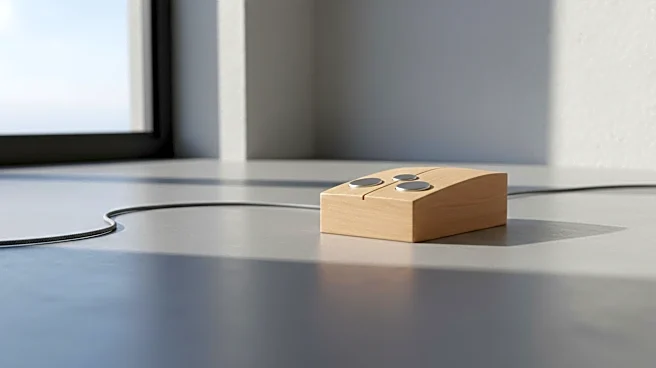
accustomed to computers as room-sized behemoths fed by punch cards, what they saw was science fiction made real. Engelbart, sitting at a custom-designed workstation, introduced the world to the computer mouse, real-time collaborative document editing, video conferencing, and hypertext—the clickable links that now form the basis of the entire internet. The event was so far ahead of its time that it would retroactively be nicknamed “The Mother of All Demos.” It laid out the blueprint for personal computing decades before it became a reality. For many, this demo and its spectacular inventions are Engelbart’s legacy.
The Real Bet: Augmenting Human Intellect
But the gadgets were never the point. The true, hidden bet was the radical philosophy that drove their creation. Engelbart wasn't trying to build better tools; he was trying to build better humans. His career was dedicated to a single, profound idea: “augmenting human intellect.” He believed that the world's problems were growing in complexity faster than our innate ability to solve them. The only way to keep up, he argued, was to use technology to enhance our collective problem-solving capabilities. While others in the field were focused on using computers for calculation or automation, Engelbart saw them as vehicles for collaboration and amplified thought. This wasn't a bet on a single product or feature. It was a fundamental bet on a new relationship between humans and machines, a partnership to make people smarter, more effective, and more capable of tackling urgent, complex challenges.
A System, Not Just a Series of Inventions
This philosophy explains why the 1968 demo was so cohesive. The mouse, the windows, and the networking weren't isolated inventions. They were all necessary components of a single, unified environment he called the oN-Line System, or NLS. The NLS was designed from the ground up to be a collaborative workspace. The mouse was for navigating complex information landscapes. The shared screens and video were for enabling teams to work together in real time, regardless of location. Hypertext was for creating rich, interconnected webs of knowledge that could be expanded and explored collectively. Engelbart wasn't building a collection of cool features; he was building a comprehensive system for knowledge work. This systems-level thinking was his true innovation. It was a risky, long-term approach in a world that often rewards simple, immediate solutions.
A Legacy of Vision, Not Just Gadgets
For a time, the world didn't quite know what to do with Engelbart's grand vision. After the initial awe of the 1968 demo faded, many of his concepts were considered too complex or eccentric. His lab was eventually disbanded, and its commercial iterations struggled to find a market for such a comprehensive system. Many of the ideas were famously adopted and simplified by others, most notably at Xerox PARC and later by Apple. Engelbart himself faded from the spotlight for a period, his core philosophy overshadowed by the commercial success of the individual components he had invented. But the bet ultimately paid off, just not in the way he might have expected. The world didn't adopt the NLS wholesale. Instead, it slowly, piece by piece, reassembled his vision. Today's hyper-connected world of shared documents, video calls, and instant access to information is the direct, if delayed, fulfillment of his prophecy.