









The Old Way: AI's Data Addiction
Not long ago, teaching an AI model to do something new was a monumental task. If you wanted an AI to reliably identify a cat in a photo, you had to show it thousands, if not millions, of pictures of cats in every conceivable pose, color, and situation.
This method, known as supervised learning, works, but it's incredibly hungry for data and resources. This created a huge barrier; only organizations with massive budgets and access to enormous, carefully labeled datasets could develop cutting-edge AI. For everyone else, the cost and time involved were often prohibitive. This data dependency limited AI's application in areas where information is naturally scarce, like diagnosing rare diseases or identifying new, emerging types of financial fraud.
Enter Few-Shot Learning: A Smarter Approach
Few-shot learning flips the script. Instead of needing a massive library of examples, a model can learn to perform a new task from just a handful—often as few as two to five. It's an approach designed to mimic how humans learn. You don't need to see thousands of bicycles to recognize a new one; you understand the concept from a few key examples. This method is part of a spectrum that includes one-shot learning (learning from a single example) and zero-shot learning (performing a task with no examples, only instructions). By leveraging pre-existing knowledge gained from training on vast amounts of general data, models can quickly generalize and adapt to new, specific tasks with minimal input.
Where It's Making a Difference
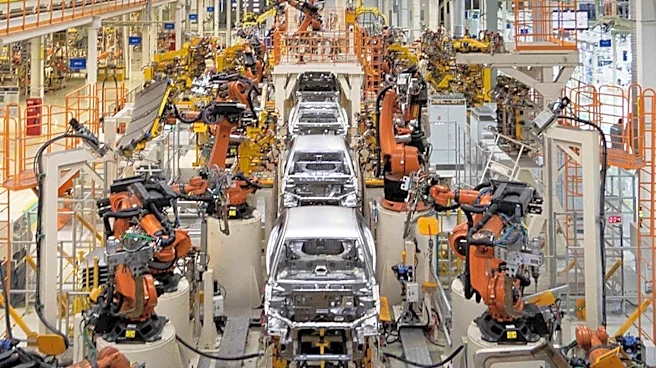
This isn't just a theoretical concept; few-shot learning is already at work in many of the AI tools we use today. The large language models (LLMs) that power advanced chatbots are a prime example. You can give them a few examples of a specific task—like summarizing text in a certain style or classifying customer feedback—and they can perform that task instantly without being retrained. This technique, called in-context learning, is a form of few-shot learning. Beyond text, it's transforming computer vision for medical diagnostics, where a model can learn to spot a rare condition from just a few medical scans. It's also used in manufacturing for quality control, allowing AI systems to identify new types of product defects after seeing only a handful of them.
Why This Quietly Changes Everything
The shift toward few-shot learning is more than just an incremental improvement; it's a fundamental change in the economics and accessibility of AI. By drastically reducing the need for huge labeled datasets, it democratizes AI development. Startups and smaller companies can now build sophisticated, specialized AI tools that were once the exclusive domain of tech giants. This accelerates innovation and allows AI to be deployed much faster, moving from concept to reality in days instead of months. Furthermore, it makes AI more adaptable and resilient. Systems can be updated to handle new information or changing trends without going through a costly and time-consuming retraining process from scratch. By making AI less reliant on brute-force data, few-shot learning is creating a smarter, more flexible, and more accessible technological future.