





The Core Misconception: A Consumer Problem
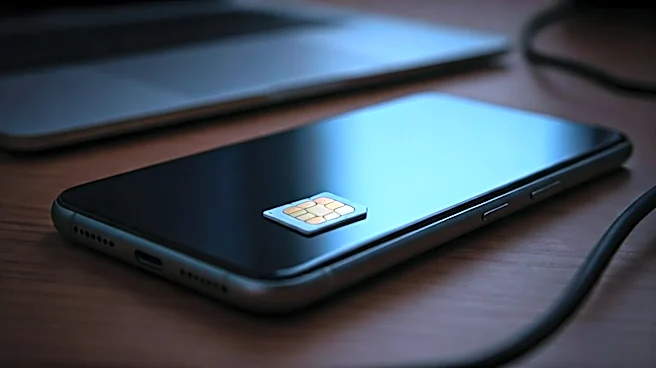
The first mistake most organizations make is classifying SIM swapping as a personal, consumer-level threat. We’ve all seen the headlines about celebrities or crypto investors losing their fortunes after their phone numbers were hijacked. This leads corporate security teams to assume it’s a problem for individuals to manage, not a primary vector for enterprise attacks. But this view is dangerously outdated. Sophisticated threat actors, from ransomware gangs like Scattered Spider to state-sponsored groups, now use SIM swapping as the first step in a corporate network intrusion. They aren’t after an employee’s personal bank account; they are after their corporate login. By taking over an employee’s phone number, they gain the one thing they need
to bypass security: the 'trusted' second factor of authentication sent via SMS. The target isn’t the person; the person is just the key to the corporate kingdom.
The MFA Paradox: When a Shield Becomes a Sword
For years, the mantra has been “Use Multi-Factor Authentication (MFA).” It’s good advice, but it created a blind spot. Teams implemented MFA and felt secure, not realizing that the most common form—codes sent via SMS text message—is inherently vulnerable to SIM swapping. In fact, SMS-based MFA turns a phone number into a master key.
When an attacker successfully swaps a SIM, they aren't just intercepting personal texts. They are intercepting password reset links, one-time login codes for VPNs, and verification messages for critical enterprise systems like Microsoft Azure or Google Workspace. The security measure (MFA) becomes the very tool that allows the attacker to escalate their access. Companies that rely heavily on SMS for account recovery and verification are essentially setting a trap for themselves, and attackers are gleefully springing it.
The Human Element: Not a Hacking Problem
Another fundamental misreading is treating SIM swapping as a technical “hack.” IT teams look for sophisticated malware or network anomalies, but a SIM swap attack doesn't start with code. It starts with a conversation. The initial intrusion happens when an attacker, using social engineering, convinces a mobile carrier employee to transfer the victim's phone number to a new SIM card under their control.
They come armed with personal data scraped from a previous breach—date of birth, the last four digits of a Social Security number, a home address—to sound legitimate. They might pretend to be the victim in a panic, claiming their phone was lost or stolen. This is a con, a high-stakes act of deception. Because the attack vector is human, purely technical defenses are ineffective. You can’t patch a person’s trust or a company’s flawed customer service script with a software update.
The Target Profile: Not Just the CEO
Finally, many teams assume attackers only target high-value individuals like CEOs or CFOs. While VIPs are certainly at risk, recent campaigns show that attackers are much smarter. They target employees with privileged access, regardless of their place on the org chart. This could be a junior IT helpdesk worker with administrative credentials, a finance analyst with access to payment systems, or a software developer with keys to code repositories.
These employees are often less prepared for a targeted social engineering attack and may not have the same level of security scrutiny applied to their accounts. By compromising a lower-level but highly privileged user, attackers can gain a foothold deep inside a network without setting off the high-alert alarms that a direct attack on the CEO would trigger. They are looking for the path of least resistance, and often, that path runs through employees your team isn't even watching.