







The Age of the Bezel
A decade ago, if you wanted more screen real estate, the answer was simple: add another monitor. Programmers, designers, and hardcore gamers cobbled together dual- or even triple-screen arrays. This setup was a sign of a serious workstation, but it was never
elegant. The dividing line between screens, known as the bezel, was a constant visual interruption. Dragging a window from one side to the other felt disjointed, and getting the colors and alignment to match perfectly was a perpetual chore. Despite the clumsiness, this was the accepted solution for anyone whose work or play demanded more space than a single 16:9 monitor could offer.
Beyond the 16:9 Box
The first ultrawide monitors, emerging around 2012, were an oddity. With a cinematic 21:9 aspect ratio, they were marketed to film buffs and gamers who wanted a more immersive experience without the black bars on widescreen movies. But they were expensive and, to many, seemed like a niche solution in search of a problem. Early models were often seen as a luxury, a curious alternative to the proven dual-monitor setup rather than a true replacement. The idea hadn't fully clicked yet, as most software and websites were still designed for the ubiquitous 16:9 format.
Redefining the Digital Workspace
The quiet revolution began when professionals realized what a single, uninterrupted canvas could do for productivity. Suddenly, a video editor could see their entire timeline without scrolling. A developer could have their code on one side and a live preview on the other, seamlessly. The most significant change was to multitasking; snapping two windows side-by-side on a standard monitor made both feel cramped, but on an ultrawide, each window had ample breathing room. This eliminated the constant alt-tabbing and window rearranging that created hidden friction in daily workflows. It wasn't just more space; it was more usable, coherent space that reduced cognitive load.
From Wider View to Deeper Immersion
While productivity found a new gear, gaming was transformed. An ultrawide monitor doesn't just show you more of the game world; it fills your peripheral vision. In racing simulators or sprawling open-world adventures, this creates an unparalleled sense of immersion that a standard screen can't replicate. It’s the difference between looking at a picture and looking through a window. This wider field of view became a genuine competitive advantage in some games and a sought-after feature that pushed developers to support the format, further cementing its place in the gaming ecosystem.
The Mainstream Tipping Point
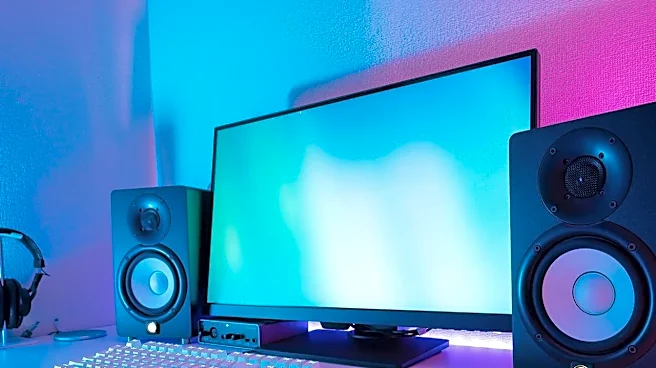
Several factors pushed ultrawides from a niche luxury to a home office staple. As manufacturing scaled, prices became more competitive with high-end dual-monitor setups. Simultaneously, the technology matured. Curved screens became common, enhancing immersion and making the screen's edges easier to view. The pandemic-fueled shift to remote work was the final catalyst. As people invested in their home offices, the appeal of a cleaner, single-monitor setup that was perfect for juggling Slack, documents, and video calls became undeniable. The ultrawide was no longer just for gamers or traders; it was for anyone who needed to manage the digital chaos of modern work.