








For many new business owners, buying a surge protector feels like a simple task on a long to-do list. But the power strip you grab at an office supply store hides a surprising and costly secret: it's not designed for a commercial environment.
The Shocks Aren't Coming from Outside
The first
surprise is where most power surges come from. While lightning is a dramatic and destructive force, it accounts for a tiny fraction of surge events. In reality, studies show that 60% to 80% of surges are generated internally. Every time a large piece of equipment—like an HVAC system, a walk-in refrigerator, or even a high-volume copier—cycles on or off, it can send small, damaging voltage spikes through your building's electrical system. These mini-surges don't cause immediate, catastrophic failure. Instead, they act like a slow poison, degrading the sensitive electronic components in your computers, servers, and point-of-sale systems over time, leading to mysterious glitches and premature equipment death.
Your Power Strip Has an Expiration Date
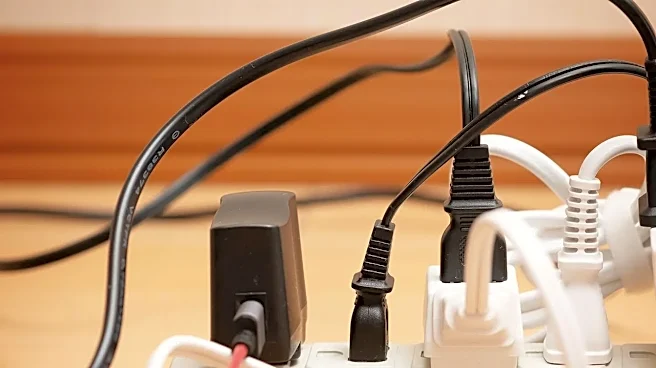
That multi-outlet strip is often mistaken for a permanent solution, but it's a sacrificial device by design. Its ability to protect your equipment is measured in joules, which represents the total amount of surge energy it can absorb in its lifetime. Every surge, big or small, uses up a portion of its joule rating. Once the rating is depleted, it may still provide power, but it no longer offers any protection, often without any warning. The 'protected' indicator light can create a false sense of security, as it doesn't always reflect the true health of the protective components inside. Relying on a cheap, low-joule strip to protect thousands of dollars in business assets is a significant gamble.
Ignoring 'Clamping Voltage' Is a Costly Mistake
Marketing often highlights the joule rating, but a more critical, and often overlooked, specification is the 'clamping voltage,' or Voltage Protection Rating (VPR). This number tells you how much voltage the device will let through to your electronics during a surge—and lower is better. A cheap protector might have a high joule rating but also a high clamping voltage, meaning it allows a damaging amount of electricity to pass through before it even starts working. For sensitive electronics like servers and computers, a clamping voltage of 330V is considered a good starting point, but the lower, the better. Choosing a device based on joules alone is a classic mistake that leaves your most critical equipment vulnerable.
Protection Starts at the Panel, Not the Plug
The biggest surprise for business owners accustomed to residential solutions is the concept of whole-building protection. Consumer-grade strips are 'point-of-use' devices (Type 3 protectors), representing the last line of defense. A proper commercial strategy is layered, starting with a 'service entrance' surge protective device (SPD), or Type 1/2 protector, installed directly at your main electrical panel by a licensed electrician. This device acts as the first and strongest line of defense, diverting large external surges from sources like utility grid switching or nearby lightning strikes before they can even enter your building's wiring. It protects everything on your circuits, including hardwired systems like security alarms and HVAC controls that can't be plugged into a simple strip.
The True Cost Isn't the Protector, It's the Downtime
Investing a few hundred to a few thousand dollars in a layered surge protection system can seem like a significant expense. However, that cost pales in comparison to the true cost of failure. The most immediate expense is replacing fried equipment, which can easily run into thousands of dollars for a server, VFD controller, or multiple workstations. But the real financial damage often comes from the subsequent downtime. Lost sales, corrupted data, reduced productivity, and damage to your business's reputation can be far more devastating than the cost of the hardware itself. Viewing robust surge protection not as an expense, but as a critical form of business insurance, is the final, crucial shift in mindset.