





The Hardware Auteur: Tony Fadell
If Lynch’s work on the Apple Watch represents the pinnacle of hardware and software synthesis, Tony Fadell is the blueprint. Known as the “Father of the iPod,” Fadell’s obsessive focus on creating a seamless user experience defined a generation of Apple products.
But like Lynch, he didn’t stop there. He left Apple to co-found Nest Labs, aiming to reinvent mundane home devices like the thermostat and smoke detector. Fadell’s career demonstrates a relentless drive to apply high-level design and engineering to everyday objects, transforming them into desirable, category-defining technology. His journey from leading a team inside a tech giant to building his own company from scratch showcases a similar conviction that great products come from sweating the details.
The Visionary Architect: Jensen Huang
While Kevin Lynch pivoted from one software giant to another, Jensen Huang has executed one of the most remarkable long-term pivots in tech history without ever leaving his post. He co-founded Nvidia in 1993 to build graphics chips for PC gamers, a niche market at the time. For decades, he led the company's dominance in gaming. But his true genius was anticipating a future where those same chips would become the engine for a global AI revolution. Huang exhibits a Lynch-like ability to operate on a long time horizon, building foundational technology years before the market fully understands its purpose. His transition of Nvidia from a hardware company for gamers to the indispensable platform for artificial intelligence is a lesson in conviction and long-range strategic vision.
The Experience Obsessive: Daniel Ek
Daniel Ek, the co-founder and CEO of Spotify, offers a software-centric parallel to Lynch’s product philosophy. While Lynch was helping build the Apple Watch, Ek was waging a decade-long battle to make streaming music not just viable, but superior to all alternatives, including Apple's own iTunes. Ek’s founding principle for Spotify was a product that felt instantaneous, as if all the world’s music was on your hard drive. This obsession with speed, user interface, and the magic of a seamless experience mirrors the product-first culture at Apple that attracted Lynch. Ek's story is one of a founder with the technical and strategic focus to take on industry Goliaths by simply building a better, more user-delighting product.
The Design-Led Technologist: Brian Chesky
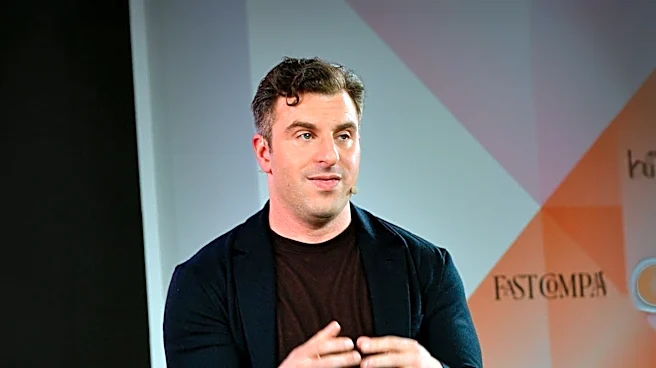
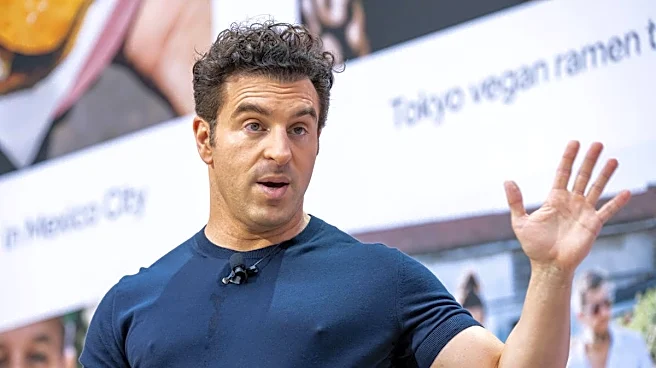
Brian Chesky isn't an engineer by trade; he's an industrial designer who graduated from the Rhode Island School of Design. Yet, the company he co-founded, Airbnb, is a complex technological platform. Chesky’s journey is compelling for those who admire Lynch because it shows the other side of the coin: a design-first leader who learned to leverage technology to solve human problems. He started Airbnb out of a need to pay rent, not with a grand technical vision. His leadership has always been grounded in empathy for the user experience, famously obsessing over every detail of the host and guest journey. He embodies the Apple ethos that technology should serve the human experience, not the other way around, proving that a deep understanding of user needs can be just as powerful as a deep understanding of code.
The Garage Tinkerer: Palmer Luckey
Before Kevin Lynch was leading the Apple Watch team, he was a young developer building early Mac software. Palmer Luckey, the founder of Oculus VR, embodies that same spirit of pure, unadulterated product creation. As a teenager, he tinkered in his parents' garage, collecting and modifying old VR headsets because he was unsatisfied with what existed. His passion wasn't to build a company but to build a device that could deliver the immersive experience he craved. He eventually created a prototype that was so compelling it kickstarted the modern VR industry and led to a $2 billion acquisition by Facebook (now Meta). Luckey’s story is a powerful reminder of the path many great product leaders, including Lynch, have walked: one that begins with a personal obsession to build something that simply has to exist.